
Since the conflict erupted at the end of February, AFP mobilised its full editorial and technical capacity to cover a war unlike any before it: simultaneous military operations, an information battle fought across social media, and an unprecedented volume of AI-generated content, all unfolding in an environment of restricted access, internet blackouts and coordinated disinformation.
Boots on the ground: the stories only AFP could tell
“We have maintained a bureau in Dubai for more than 35 years. We have worked for years to build up solid working relations with the Gulf governments and a strong network of sources around the region, enabling us to keep ahead of the story.”
When the first missiles struck Tehran, AFP quickly confirmed the start of the conflict with the first dateline from the Iranian capital, providing international newsrooms with verified, on‑the‑ground reporting as events unfolded. AFP is among the very few international news organisations to maintain a permanent presence in Tehran, with journalists continuing to report despite explosions close to AFP’s office and near‑constant internet outages.
That presence relies on AFP’s unrivalled network of journalists in Iran and across the region, developed through long‑term source‑building and permanent field reporting. In environments where access depends on trust, continuity, and local expertise, this network delivers immediate results:
AFP delivered the first dateline from Tehran confirming the outbreak of the conflict, grounding global coverage in on‑the‑spot reporting.
AFP was the first global news agency to break the news of the death of Iran’s Supreme Leader, Ali Khamenei.
Following AFP’s exclusive reporting, including verified images of the drone strike on the US Embassy in Riyadh, Iran’s ambassador to Saudi Arabia granted AFP an exclusive interview, widely cited worldwide.
- The first verified video footage of the strike on Qatar’s Ras Laffan gas terminal
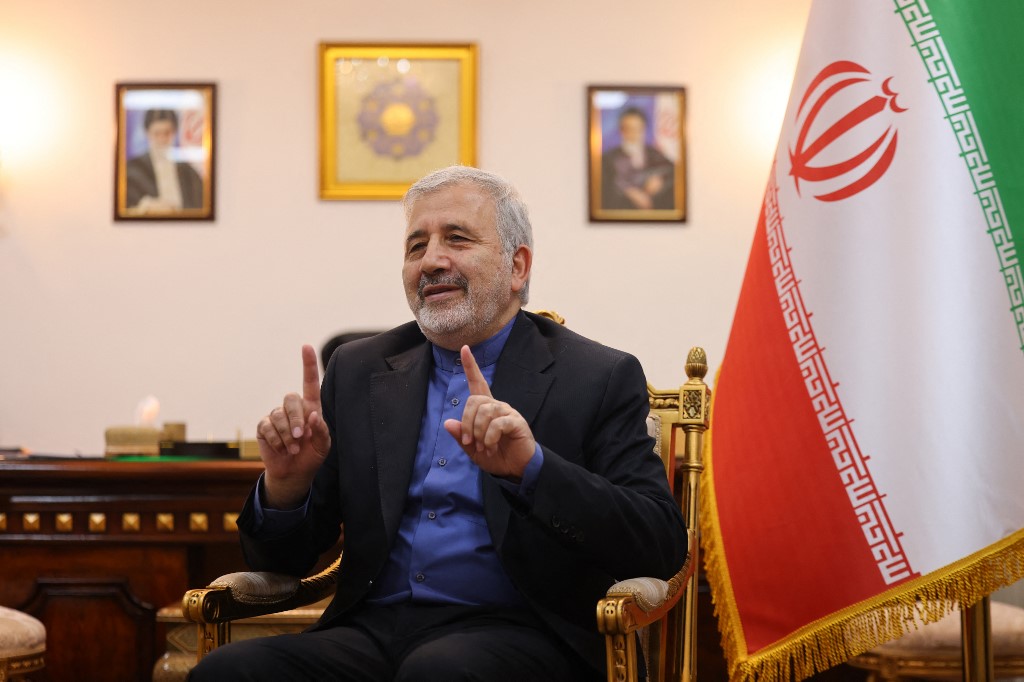
Iran's ambassador to Saudi Arabia, Alireza Enayati, speaks during an interview with AFP at the Iranian embassy in Riyadh on March 5, 2026. © Fayez Nureldine / AFP
Beyond the strikes: the human angle
AFP’s coverage goes well beyond military operations and official statements. Teams on the ground continue to document what the war means for ordinary people as it unfolds: in Tehran, cafés remain open amid fear and disrupted connectivity; in Lebanon, daily life continues in shelters in Beirut’s southern suburbs, alongside cautious returns by displaced families and moments of fragile relief following temporary ceasefire announcements.
These scenes often invisible when access is restricted allow AFP to report the human cost of a war over time, not only its headline moments, but the lived reality of populations enduring a war that is still ongoing.
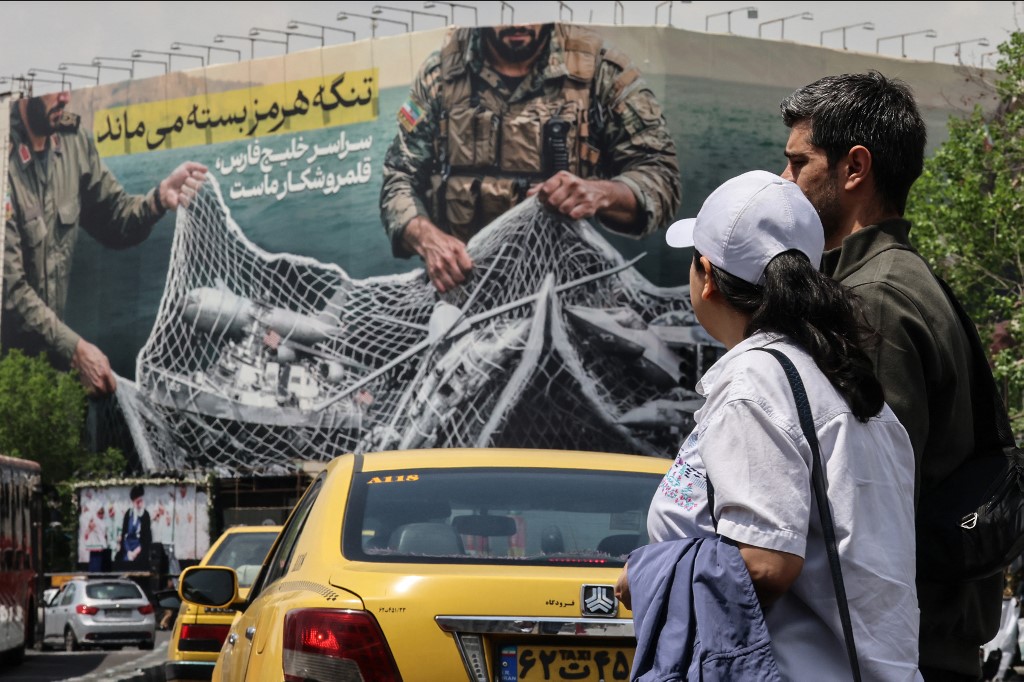
Iranian walks past a giant billboard reading 'The Strait of Hormuz remains closed' at the Revolution Square in Tehran on April 22, 2026.© Atta Kenare / AFP
Washington: reading power in real time
AFP’s long‑established presence at the White House allows the agency to report and contextualise US decisions as they are made. When AFP White House correspondent Danny Kemp managed to speak to US President Donald Trump by phone just after the announcement of a truce, his deep familiarity with US decision‑making enabled AFP to break the news while immediately placing it in context.
That combination of specialist access and expertise helped illuminate the diplomatic, military and economic implications of decisions taken at the highest level, and their direct consequences on the ground in the Middle East and across global markets.
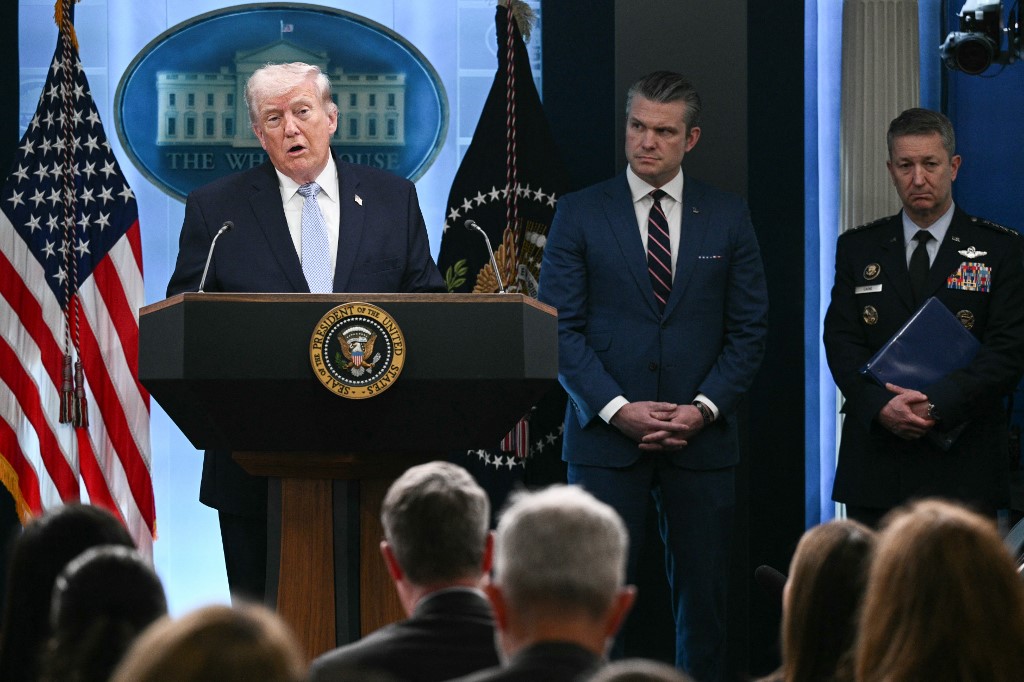
US President Donald Trump, alongside US Secretary of Defense Pete Hegseth and Chairman of the Joint Chiefs of Staff General Dan Caine , speaks about the conflict in Iran at the White House on April 6, 2026. © Brendan SMIALOWSKI / AFP
Verification as front-line journalism: fighting against AI disinformation with the leader of fact-checking
The Iran conflict marked a turning point in the spread of disinformation. For the first time at this scale, around 25 percent of the content flagged to AFP’s fact-checking teams was generated or manipulated using artificial intelligence.
Video game footage presented as real bombing raids. Fabricated images of captured American pilots. A staged funeral scene that became the most widely shared piece of misinformation of the entire conflict. AFP’s teams identified, investigated and debunked them in real time, frame by frame, drawing on open-source analysis and Farsi-language expertise :
- 650 fact-checking articles published in six weeks
- +200 selected, verified and certified UGC videos pushed to thousands of media outlets worldwide
- 25% of flagged content was AI-generated or AI-manipulated
Visual journalism in continuous production: 24/7, everywhere
In a conflict where physical access was among the most restricted in recent years, AFP’s visual output continued without interruption. Its strength lay in the combination of formats: photography and video from the ground, satellite imagery documenting areas beyond reach, and user‑generated content processed under the same editorial standards as AFP’s own material.
AFP journalists were present at key moments. Exclusive images of the damaged US consulate in Riyadh after an Iranian drone strike were distributed worldwide, providing visual confirmation of an event most organisations could only describe. AFP also obtained the first video footage linked to the attack on Qatar’s Ras Laffan gas terminal, which became one of the most widely used visual items of the conflict. A rare photograph of a warship in the Strait of Hormuz, taken at the outset of hostilities, was picked up by international media, including the New York Times.
Where access was impossible, evidence came from data and satellites. AFP’s Data and OSINT teams analysed imagery from Planet Labs and Copernicus to document strike damage, track naval movements and map shifts in the conflict. More than 200 videos from open sources were collected, verified and distributed to 200 television networks worldwide. A follow‑the‑sun organisation ensured continuous production across Asia, Europe and the Americas.
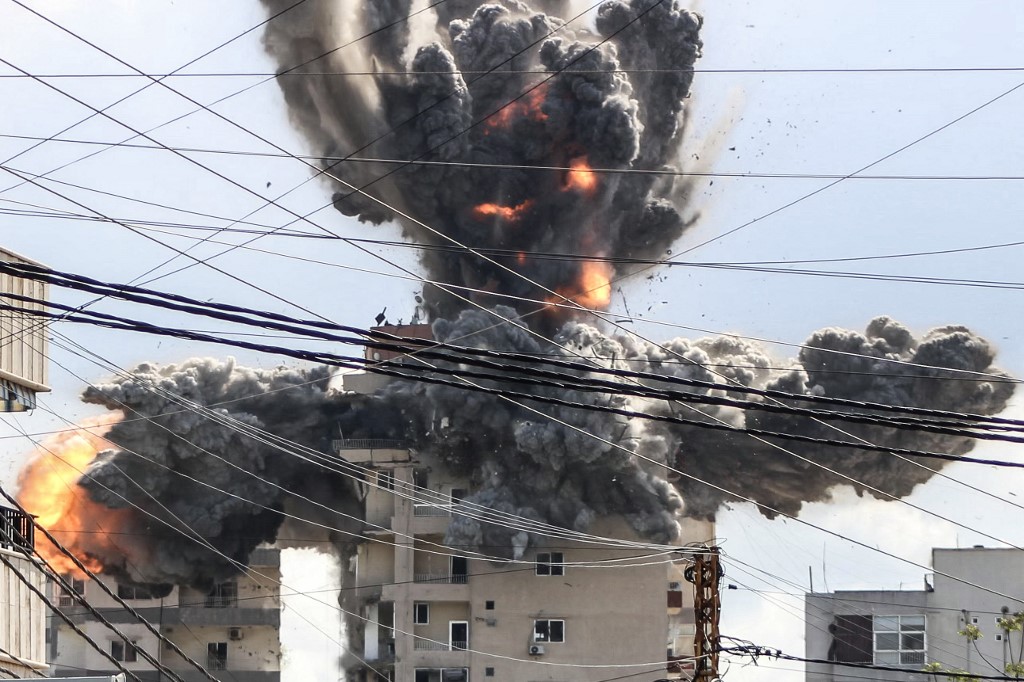
A fireball rises from a building hit by an Israeli airstrike in the area of Abbasiyeh, on the outskirts of the southern Lebanese city of Tyre, on April 8, 2026. © Kawnat HAJU / AFP
Data and OSINT: reporting what no one else could see
AFP’s open‑source intelligence (OSINT) specialists, who analyse publicly available data such as satellite imagery, maritime tracking information and open databases, worked in parallel throughout the conflict to produce reporting that went beyond what ground‑level observation could reveal. The teams identified the first commercial transits through the Strait of Hormuz following the ceasefire announcement and tracked shipping movements in real time in the days that followed.
This work fed directly into AFP’s global economic coverage, providing verifiable, independent evidence to assess developments on the ground and to set against official statements.
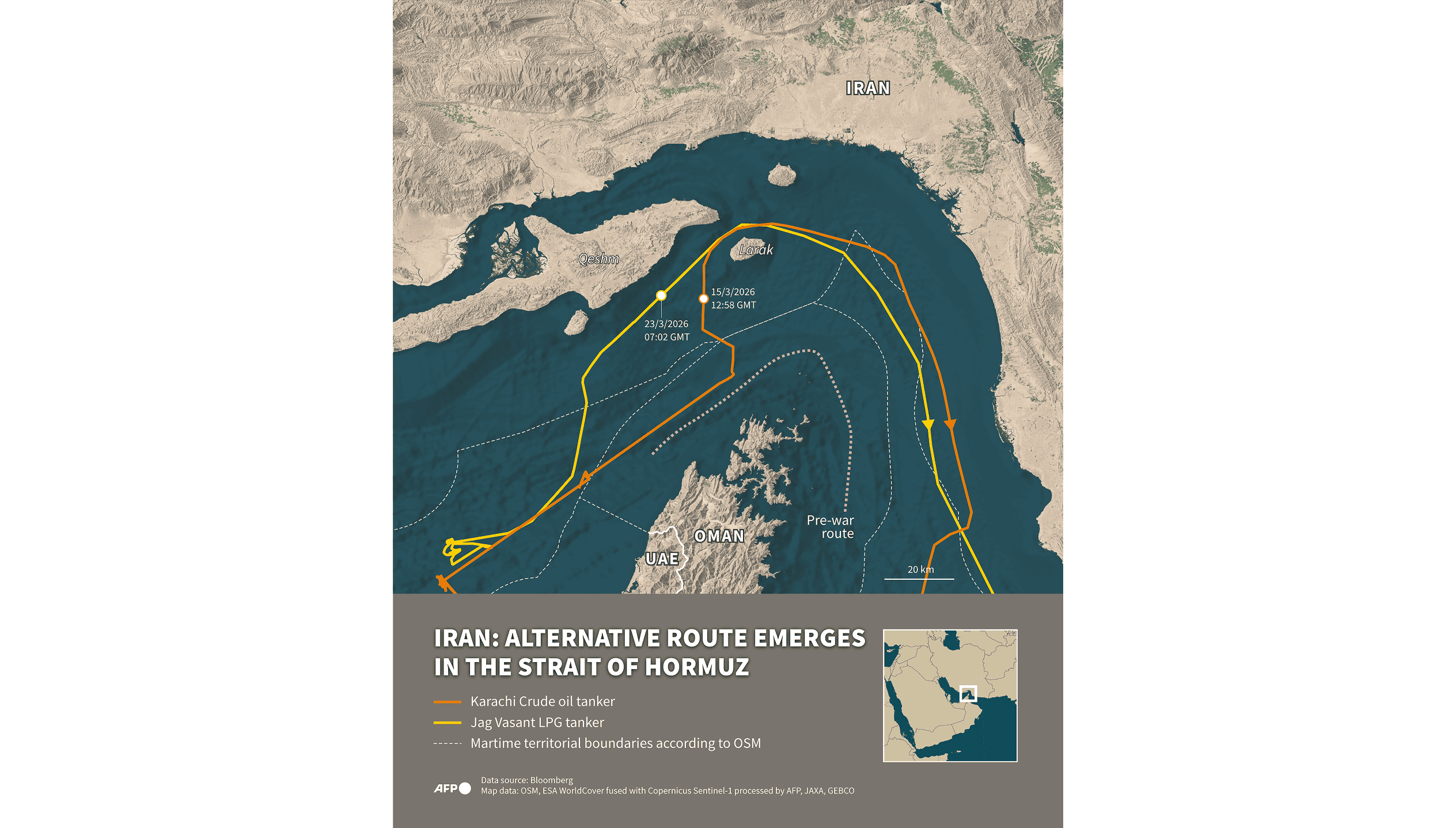
Infographic with map showing an alternative route taken by some ships passing through the Strait of Hormuz and the route used before the start of the Middle East war which began on February 28, 2026.© Patricio ARANA / AFP
Reporting when the truth is under pressure
The Iran conflict is not only a major geopolitical crisis. It is a stress test for journalism in the age of artificial intelligence. In an environment saturated with images, fabrications and competing narratives, AFP demonstrates that reliable information rests on foundations that have not changed: people on the ground, editorial rigour, systematic verification and collective organisation. That commitment, sustained every day, is what allows the agency to keep reporting when the truth is hardest to find.