
AFP’s investigation into Myanmar’s scam centres uncovered a sprawling international network of fraud that has victimised thousands worldwide. The report revealed how Starlink’s satellite internet service was exploited to power illicit operations, exposing both the human and financial toll of the scam industry. By combining data journalism, multimedia reporting, and first-hand testimonies, AFP shed light on a story that spans continents and challenges both authorities and corporations. The journalists behind the investigation — Fiachra Gibbons, Isabel Kua, Matthew Walsh, and Nalini Lepetit-Chella — share their experiences.
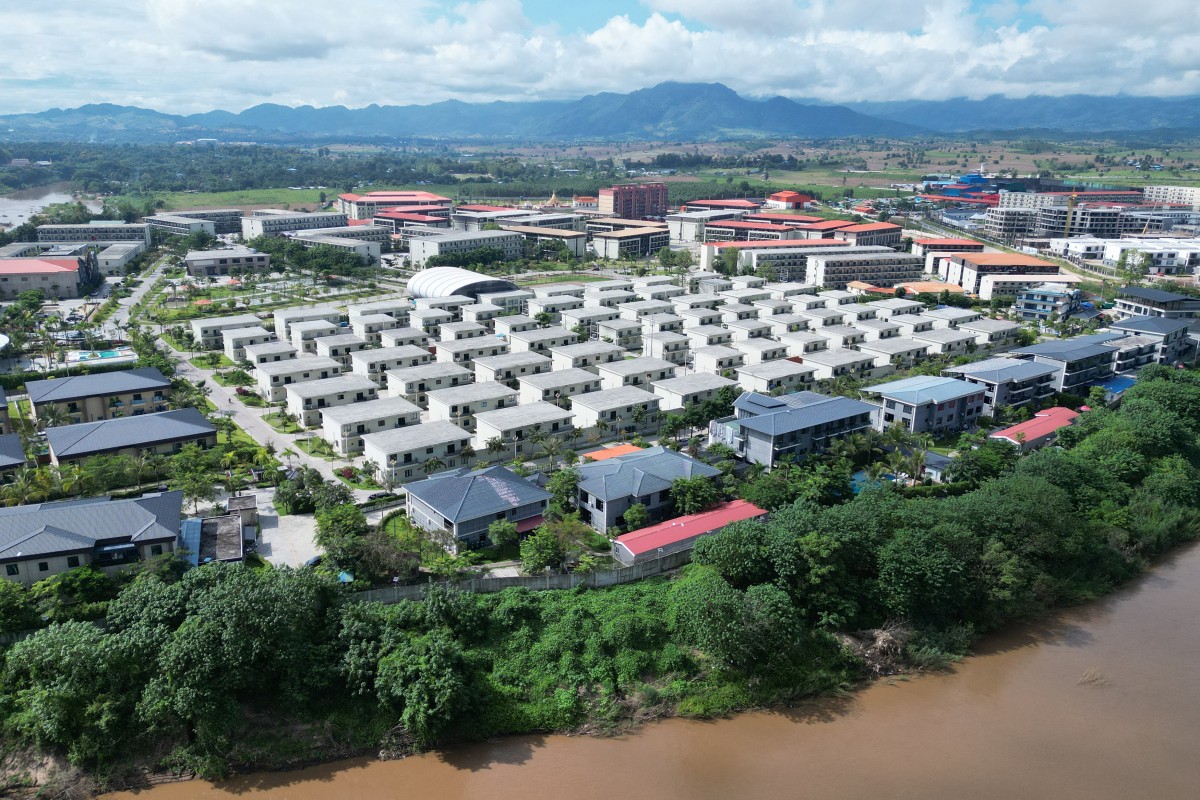
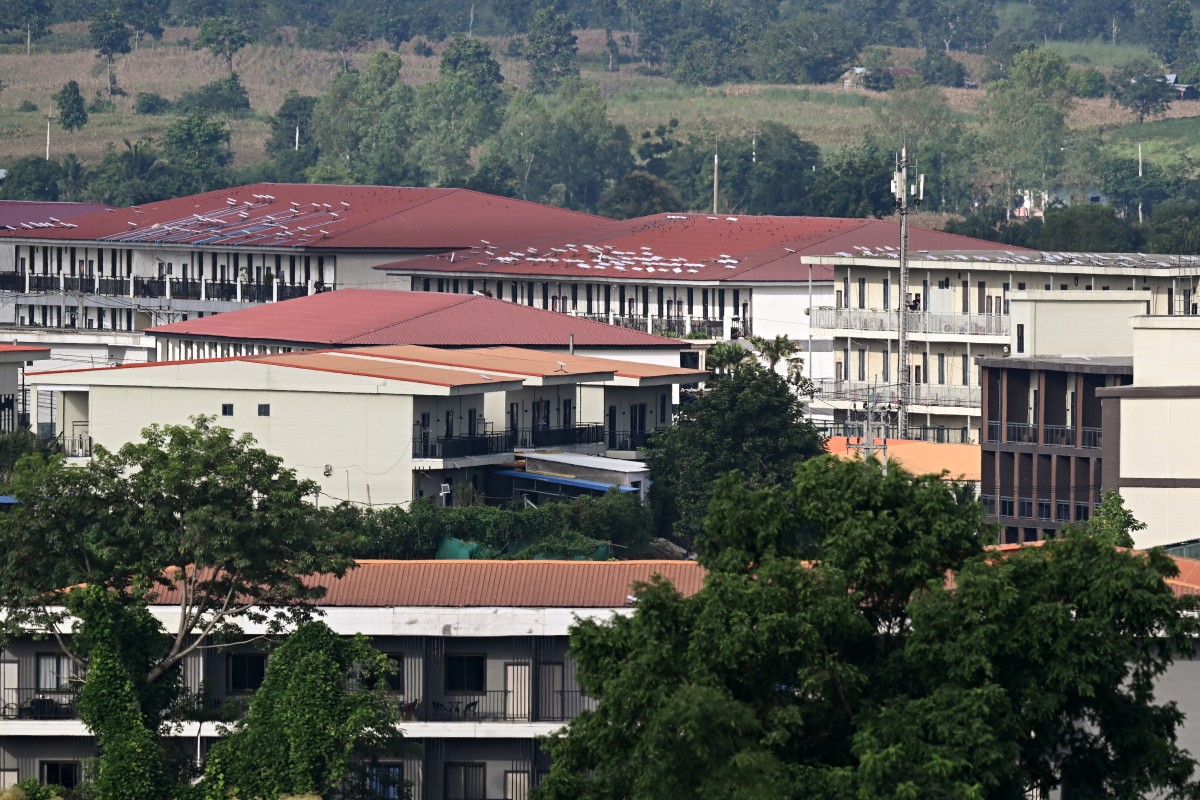
This aerial photo taken on September 17, 2025 shows the KK Park complex in Myanmar's eastern Myawaddy township, which has been blamed for scamming Chinese and American victims out of billions of dollars. © Lillian Suwanrumpha / AFP
Looking back at a scoop
“I have rarely worked on a story with such far-reaching consequences. From forcing Elon Musk’s Starlink to deactivate 2,500 satellite devices powering Myanmar’s scam centres, to militias blowing up large parts of the biggest ‘scam city’ in a surreal attempt to show they were cracking down on a business they themselves allegedly controlled and profited from — it’s been extraordinary.
We also revealed that a U.S. congressional committee was investigating Starlink and could call Musk to explain why his service was being used to defraud Americans. The story even broke through China’s Great Firewall, becoming the top trending topic on Weibo, with users posting translations faster than censors could remove them.
China has since intensified its fight against scammers, with two alleged kingpins named in our reporting extradited. Experts say the investigation helped galvanise the U.S. to establish the Scam Centre Strike Force in November, bringing together the FBI, Secret Service, and Justice Department.”
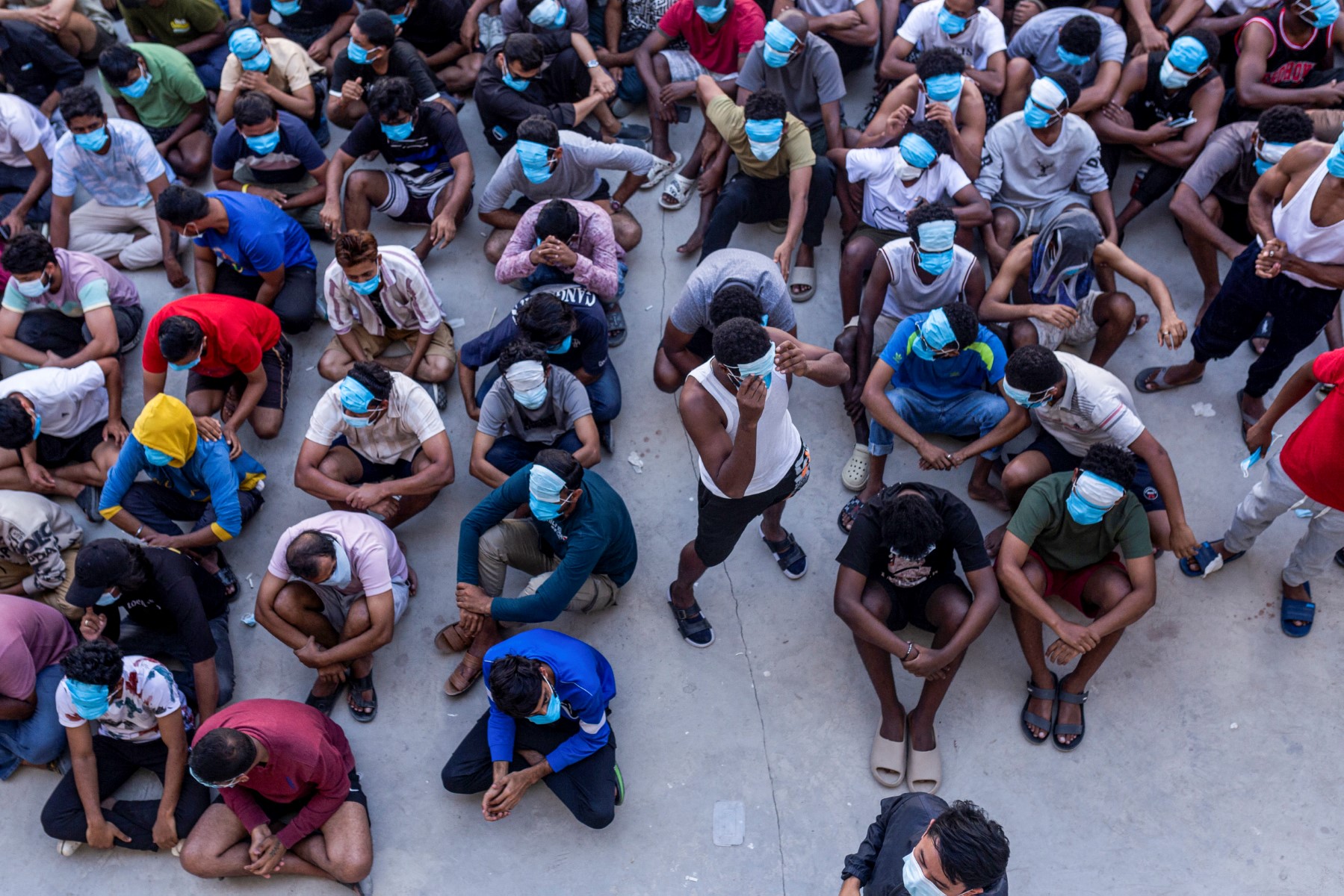
Alleged scam centre workers and victims are pictured during a crackdown operation by the Karen Border Guard Force (BGF) on the KK Park complex in Myanmar's eastern Myawaddy township on February 26, 2025. Hundreds of foreigners were sent home from scam compounds, with many workers saying they were trafficked and forced to swindle people around the world. © AFP
Inside the scoop: a first testimony
Fiachra recounts: “It all began when an AFP reporter obtained the phone number of a Chinese scam centre worker during a crackdown near Myawaddy on the Thailand-Myanmar border in February. The man, whom we called Sun, said he had been trafficked and tortured by his bosses. AFP's journalist Matthew Walsh pursued the lead, travelling across the country to interview him in his mountain village.
Despite being followed by local authorities, Matthew Walsh and his colleague Isabel Kua, in Beijing, pieced together a compelling picture of the slave-like conditions inside the centres. Sun described being sold from one compound to another, while the UN estimated the scams had cost victims $37 billion. Matthew also uncovered another cruel twist: families of trafficked workers were themselves scammed into paying for their release."
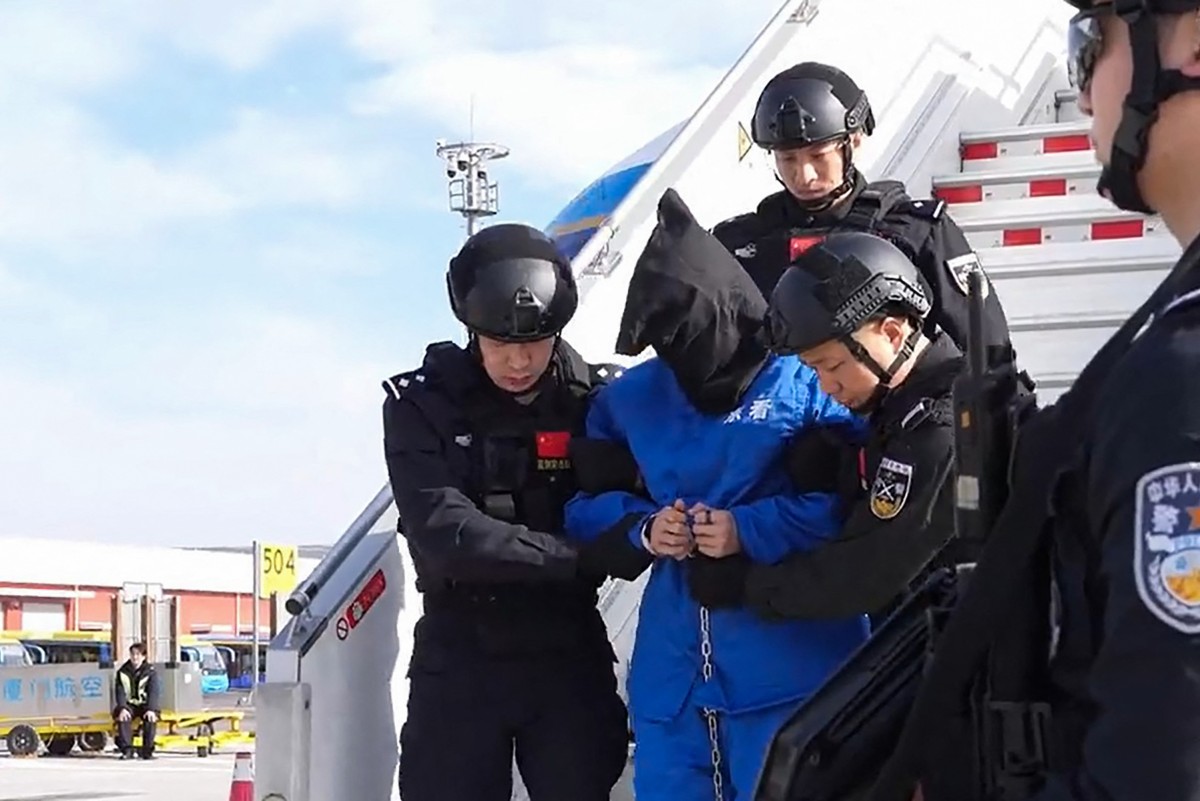
“In February last year, Chinese state media reported extensively on hundreds of scam centre workers being repatriated from Myanmar. The images were striking, dozens in handcuffs, escorted off planes by police.

Chinese tycoon She Zhijiang (C) is escorted by Royal Thai Police officers out of the Suvarnabhumi Airport Police Station in Bangkok on November 12, 2025, before being extradited to China. He is accused of running a massive scam hub in Myanmar. © Chanakarn Laosarakham / AFP
Matthew and I knew we had to investigate further. Sun, living in Yunnan province near the Myanmar border, gave us rare insights into the inner workings of the scam operations. But minutes into a follow-up interview at his farmhouse, local officials intervened, and Sun declined to continue. This is the reality of reporting in China, where foreign media are often viewed with suspicion.
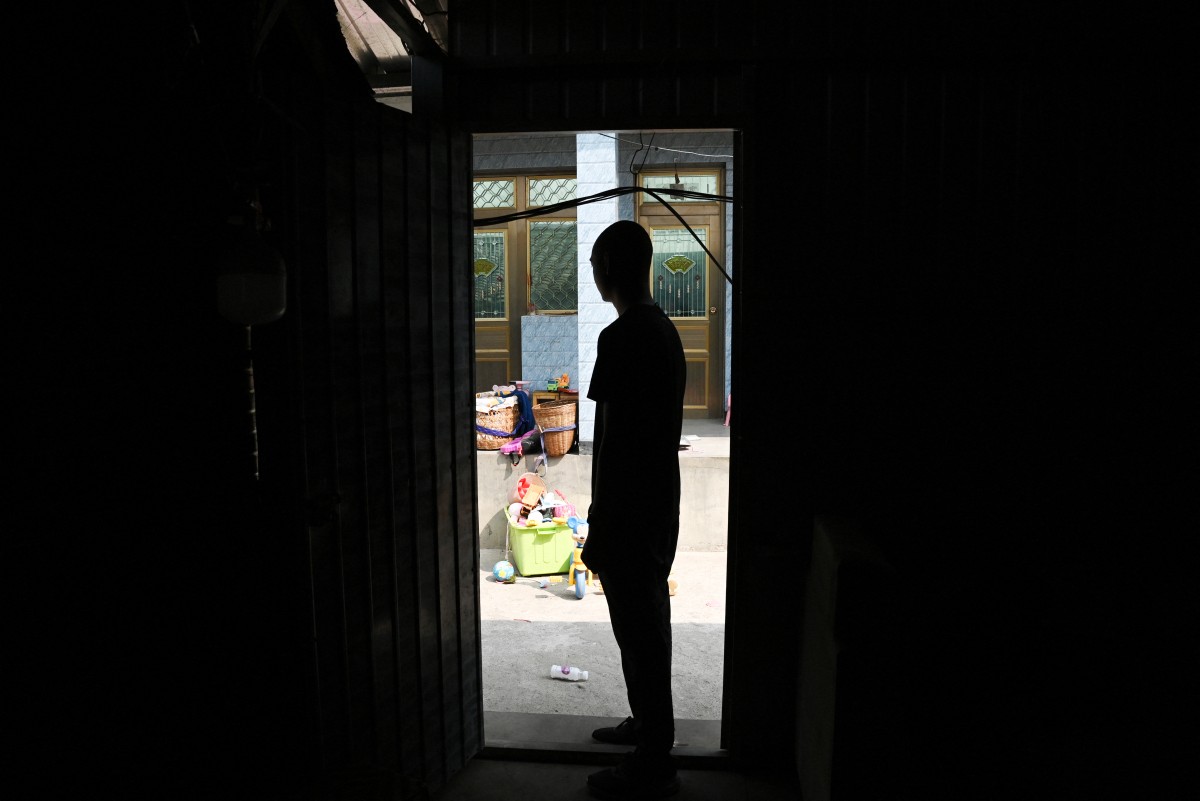
This photo taken on April 3, 2025 shows a man referred to as Sun, a pseudonym AFP is using to protect his identity, who was one of thousands of Chinese people swallowed up by Myanmar scam centres. He was sent back to his village in China after the crackdown in February 2025. © Greg Baker / AFP
Back in Beijing, we scoured social media, speaking with families searching for loved ones believed to have been trafficked, experts, and so-called rescuers. What emerged was a murky ecosystem where traffickers could both lure victims into compounds and demand ransom for their release. Many interviewees were initially sceptical of us, fearing we were scammers ourselves.
Working with colleagues in Paris, we analysed satellite imagery that revealed the proliferation of scam centres despite repeated crackdowns. These images, along with photos from Mae Sot, confirmed that Starlink’s internet service played a crucial role in powering operations.”
Using Data to Track Scams
Fiachra explains further: “With many questions unanswered, we turned to satellite imagery of Myawaddy, often obscured by mist or monsoon clouds. On clear days, Dataviz journalist Nalini Lepetit-Chella and I were stunned to see a surge of new buildings inside the scam centres. We also spotted forests of Starlink dishes that hadn’t been there before.
Digging into regional internet registry data, we found Starlink had suddenly become Myanmar’s largest internet provider after cables linking the centres to Thailand were cut. Drone footage from Bangkok confirmed our suspicions.”
“On September 10, 2025, Fiachra asked our department to verify whether scam centres were still active despite promises of eradication earlier that year. Using advanced Earth-observation techniques, we identified significant developments in several centres, especially KK Park, where dozens of new buildings and roads have appeared.
High-resolution satellite images showed Starlink antennas on rooftops. A team in Mae Sot corroborated these findings on the ground.
We also analysed data from APNIC, which revealed a massive surge in Starlink use in Myanmar between April and summer 2025. Although APNIC later adjusted its methodology, temporarily obscuring the data, the NGO eventually restored the original figures, confirming our interpretation.”
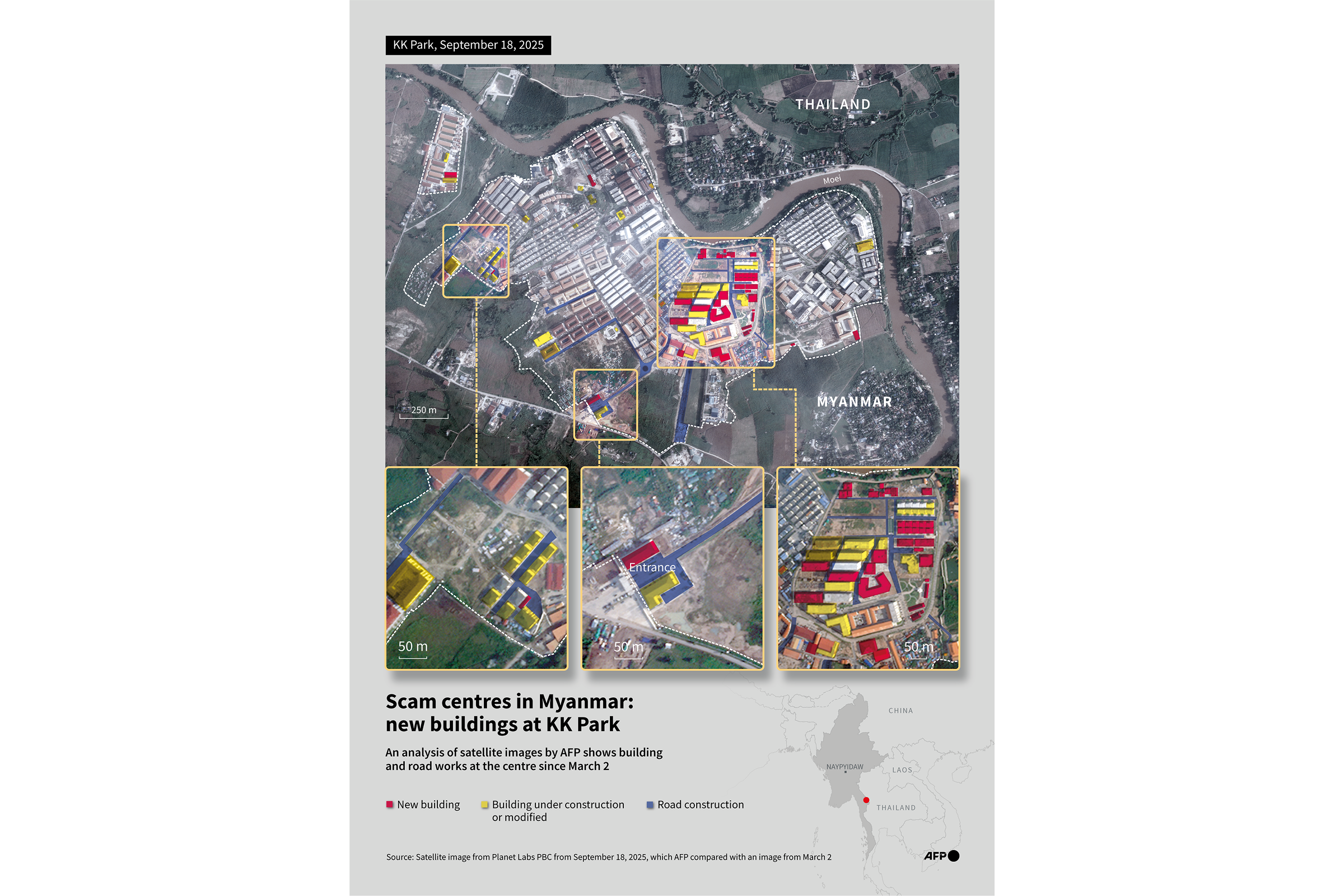
Infographic with a satellite image from Planet Labs PBC showing the scam centre KK Park in Myanmar, near the border with Thailand, and highlighting new buildings between March 2, 2025, and September 18, 2025. © Sabrina Blanchard / PLANET LABS PBC / AFP
A widely acclaimed investigation
“This reporting is exactly what public-service journalism should be: rigorous, fearless, and impossible to ignore. The team connected dots across organised crime, human trafficking, financial secrecy, weak enforcement, and global technology providers. The result is devastating, capturing the scale, sophistication, and cruelty of the modern scam ecosystem better than almost anything I’ve seen. That is why it deserves Pulitzer recognition.”
Erin West, Retired Prosecutor and Operation Shamrock Founder
“I am impressed with this story - it is a great instance of journalism. […] I had assumed that the extensive use of Starlink in Myanmar was a data error, and I was looking for other plausible explanations. Your story provided a different interpretation: that the data was indeed correct, and while it would normally be difficult for a poor country like Myanmar to afford such a large collection of Starlink services, the abuse of the entire system by scam centres, as your story exposed, provided an explanation of data that I was gathering.” Geoff Huston, Chief Scientist, APNIC
Geoff Huston, Chief Scientist, APNIC ( (Asia-Pacific Network Information Centre)