


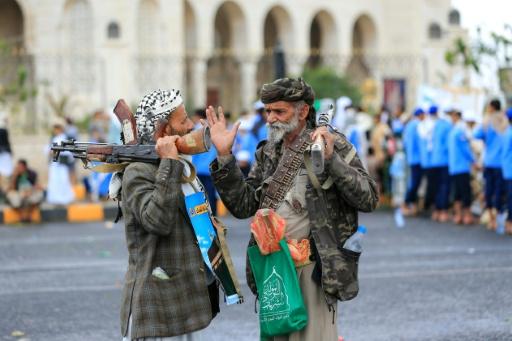
Yemen's Houthis accused Saudi Arabia on Tuesday of launching a wave of deadly strikes that killed civilians and prison inmates, as Riyadh seeks to repel an offensive that has seen the Iran-backed group seize strategic territory.
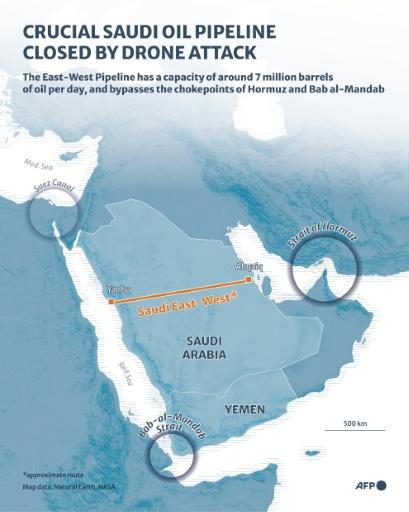
The recent Houthi takeover of Yemen's Red Sea coast has left hundreds dead and heightened fears over global trade and shipping through the vital Bab al-Mandab strait.
It has also forced thousands to flee, with the United Nations on Tuesday forecasting the number of displaced could swell from over 130,000 today to more than 230,000 in the coming months.
The gains made by the Houthis have cemented the hold of Iran and its regional allies over two key waterways in the Middle East -- and the straits of Bab al-Mandab and Hormuz -- which are major shipping arteries for global flows of energy.
Saudi Arabia, which backs Yemen's internationally-recognised government, has sought to contain the Houthi advance with airstrikes.
The Houthis have retaliated with attacks on Saudi territory, including a strike targeting the capital Riyadh for the first time in years.
It came days after Saudi Arabia accused the Houthis of targeting the holy city of Mecca, though the fighters denied the claim.
In a rare statement, Saudi King Salman praised the armed forces and security services for defending the country, and condemned the alleged attempt to target Mecca, calling it "a provocation to Muslims around the world", and branded the Houthis a "terrorist militia".
In Yemen, the Houthis said a strike on a prison killed nine detainees, while they also accused the Saudis of killing six civilians, including two children in the port city of Mocha.
Two more civilians were killed by strikes in Yemen's Al-Jawf province, the Houthis added.
"A mother and child were killed, while her husband and two of her other children were wounded in strikes carried out by the Saudi enemy" in the Al-Batin area, Houthi media said, citing the Houthi health ministry.
As violence has escalated, thousands of families have been forced from their homes, many for a second or third time.
"I hope I can find a house to live in with my children. We're exhausted by the heat, the dust and the humiliation," Arwa, a mother of four children, told AFP at a camp for displaced people near Aden.
The Middle East war began in February with US-Israeli strikes on Iran, which prompted the Islamic republic to retaliate with attacks around the region and by mobilising its allies.
While the Yemen civil war predates the broader regional conflict, it has become its most active front in recent days.
Fighting between the Houthis and Saudi-backed Yemeni forces has in the past two days killed 154 people, military sources from both sides told AFP.
"The death toll from Saudi airstrikes, clashes and artillery fire in the governorates of Taiz, Al-Jawf, Marib and Saada stands at 118," Houthi military sources said, while government sources reported 36 killed in their ranks.
Saudi Arabia's civil defence agency on Tuesday issued a warning of potential danger in the country's south near the Yemen border, the first alert since the Houthis launched their attack on Riyadh over the weekend.
The alert, which asked people to remain indoors and avoid open areas, was lifted a short while later.
G7 leaders representing Canada, France, Germany, Italy, Japan, the United Kingdom and the United States called on the Houthis to "immediately cease all military actions".
They also demanded the Houthis end "all threats and attacks against civilian shipping, and to return to the political process in good faith", while urging Tehran "to end its arming of and support for the Houthis".
Britain has agreed to provide some military support to Saudi Arabia, defence minister Luke Pollard said, while France also pledged to help secure Saudi energy infrastructure, a diplomatic source told AFP.
But "this in no way involves taking part in the conflict with the Houthis", the French source said.
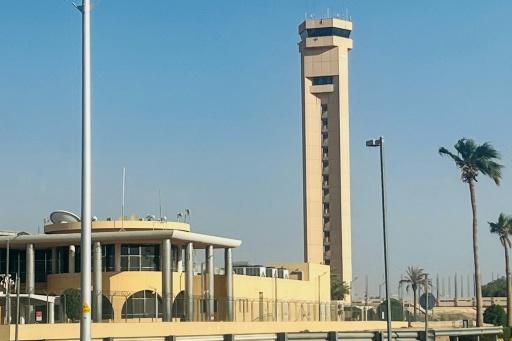
The Houthis have carried out attacks against facilities belonging to Saudi oil giant Aramco in the Red Sea port city of Yanbu.
Yemen's government and Saudi Crown Prince Mohammed bin Salman have reportedly requested help from US President Donald Trump in fighting the Houthis.
On Tuesday in New York, Trump's special envoy Steve Witkoff met Iran's foreign minister, Abbas Araghchi, on the sidelines of the UN General Assembly in New York.
According to Iran's state news agency IRIB, Araghchi told Witkoff that Tehran's demands for a reopening of the Strait of Hormuz included "the immediate lifting of the (US) naval blockade, the prompt payment of all Iranian assets that have been frozen, and an end to the war on all resistance fronts".
Latest stories
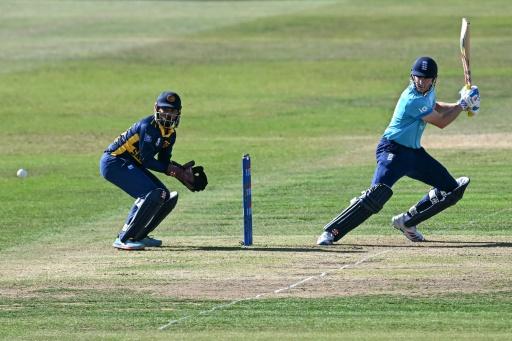
Sports All-rounder Jacks stars as England beat Sri Lanka in 1st ODI
Will Jacks starred with both bat and ball as England overwhelmed Sri Lanka by 89 runs in the first one-day...
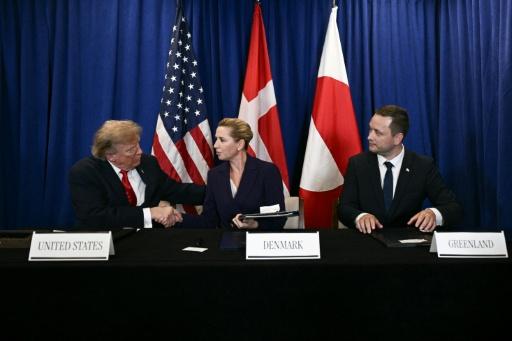
US News Trump signs security deal with Greenland, Denmark at UN
US President Donald Trump signed a security deal Tuesday with the leaders of Greenland and Denmark, cooling temperatures after his contentious calls to...

US Politics Oil prices retreat as markets welcome US-Iran talks
Oil prices fell again Tuesday as markets focused on the potential upside of renewed US-Iran diplomatic engagement while shrugging off a bellicose address by President...