
AFP Through the Years
For more than 75 years, Agence France-Presse has been reporting on the world. As the successor to the first news agency, founded in 1835, AFP has evolved through major political, technological and media transformations to become one of the world's leading independent sources of news. Through these images, discover highlights from a story that continues to unfold every day.
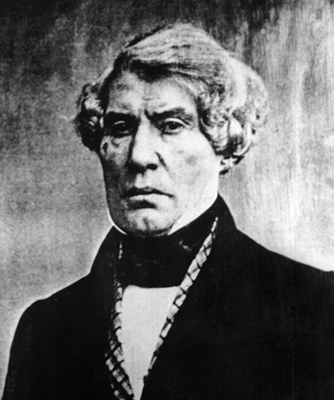
© AFP
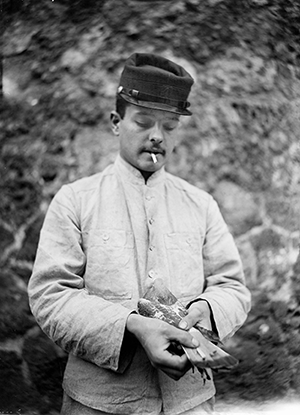
© Harlingue / Roger-Viollet / AFP
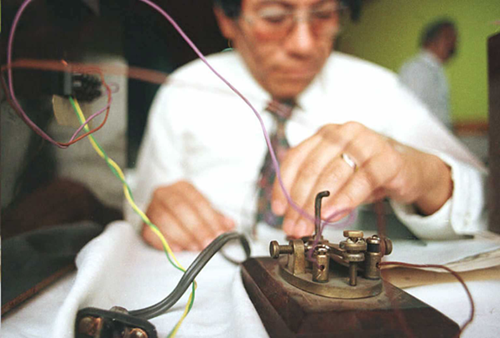
© Sharlyn Bjorkgren / AFP
© AFP
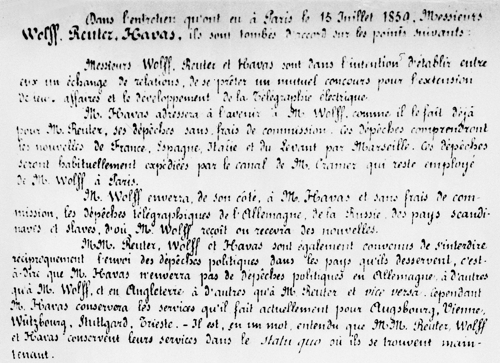
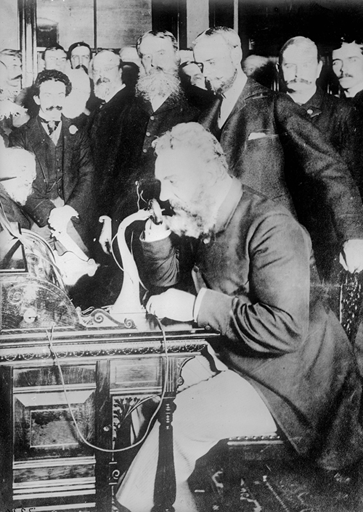
An agreement between the three
major agencies - Reuter, based in London, Wolff in Berlin, and Havas – divides the world between them for the collection and dissemination of
information.
© Roger-Viollet
© AFP
The teleprinter – or printing telegraph – was developed in the early 1850s. It enabled multiplex telegraphy (sending several signals over a single wire) and the transcription of dispatches in plain text upon arrival (gradual abandonment of Morse code). Havas begins using it in 1880.
© AFP
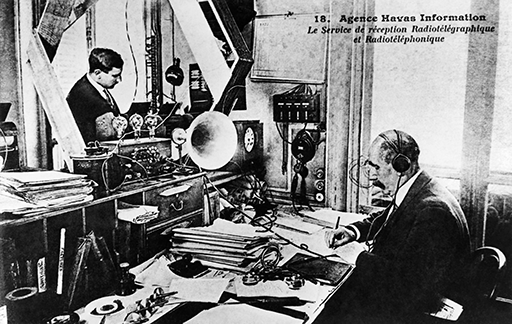
Transmission via long-wave radio (radiotelegraphy). The volume of news increased thanks to new transmission methods and followed the development of the press in France.
© AFP

© AFP
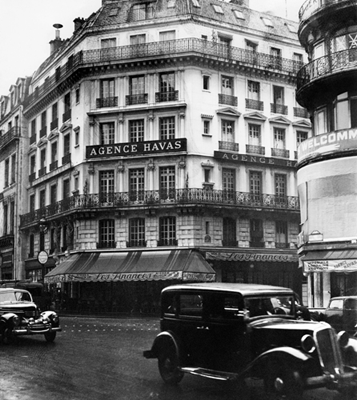
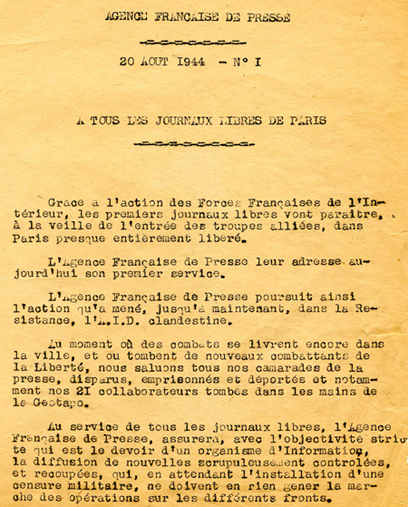
The news department of Havas becomes an official agency nationalized by the Vichy regime. Two laws separated the Advertising branch, which kept the Havas name, and the news department, which became State property under the name Office Français d’Information (OFI).
© AFP
© AFP
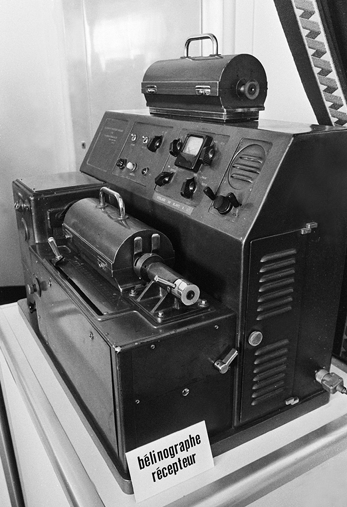
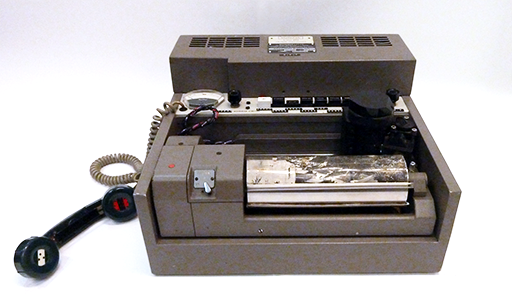
The Belinograph, invented in 1907 by Édouard Belin, makes it possible to transmit images via telephone and radio links.
© AFP
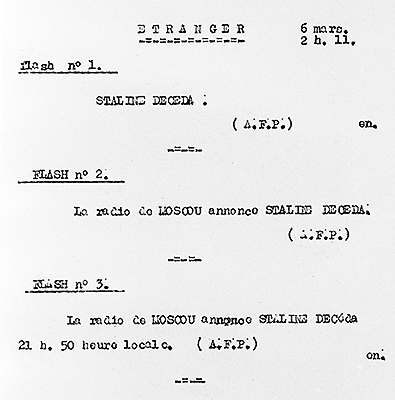
The death of Joseph Stalin on March 5, 1953 gives AFP a global scoop. At the time, foreign journalists in Moscow were unable to transmit news instantly due to censorship. AFP, however, remained permanently tuned to domestic Radio Moscow broadcasts from Paris.
© AFP
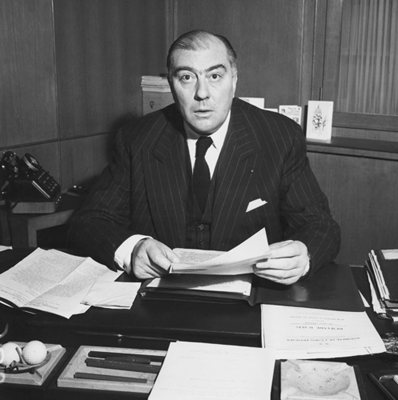
After the adoption of AFP’s statute in January 1957, he would be re-elected every three years as chairman of AFP until 1975.
© AFP
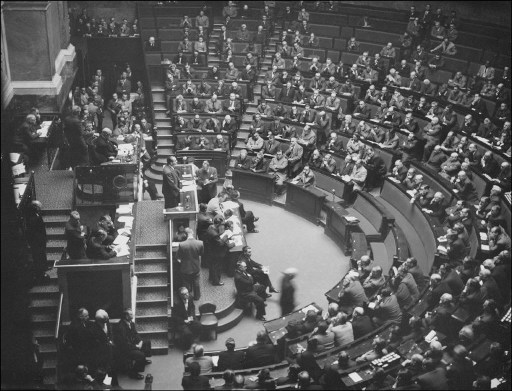
Parliament adopted AFP’s statute. It guarantees its editorial independence, its presence worldwide and its financial autonomy. Its Chairman and CEO is now elected by the Board of Directors.

© AFP
© AFP
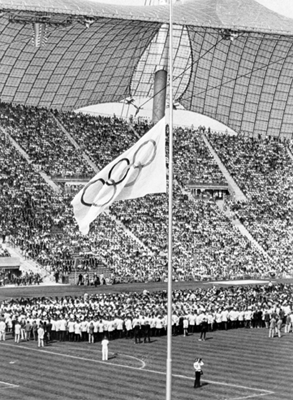
AFP announces the death of the Israeli hostages one hour ahead of other media. A scoop obtained by Charles Biétry.
© AFP
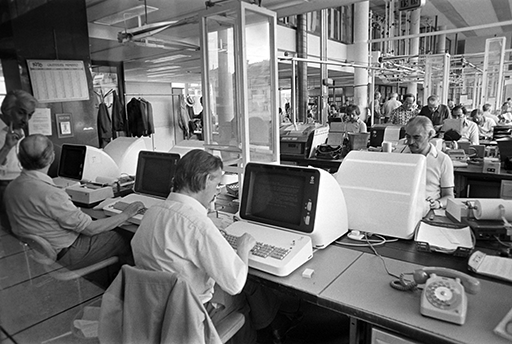
The Latin American desk becomes the first department to use computers. Computerisering the newsroom had been decided in 1973. In November 1975, an agreement was signed with trade unions to implement this major technological transformation.
© AFP
© AFP / Bertrand Guay
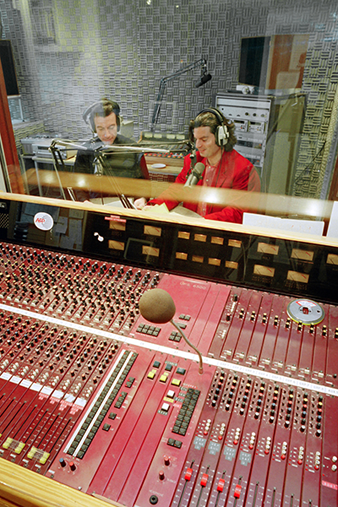
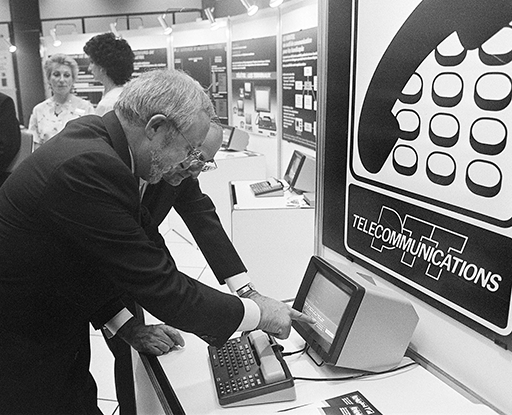
AFP provides ready-to-broadcast news bulletins, music programmes and features to local radio stations recently authorised in France.
© AFP
.png)
© AFP
AFP journalists were able to transmit their information directly via satellite from the field thanks to the Inmarsat suitcase. This equipment, which weighed 40 kg, was very useful in telecommunications black spots, particularly in war zones.
© AFP

© Romeo Gacad / AFP
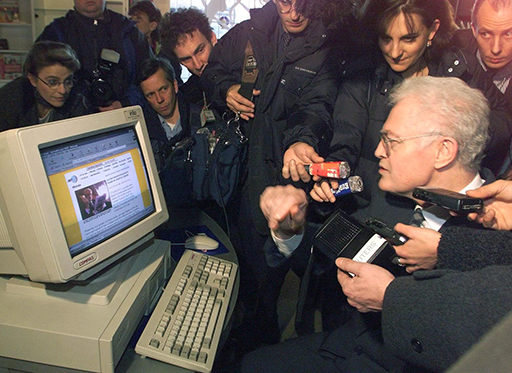
AFP announces Ben Johnson’s disqualification at the Seoul Olympic Games two hours ahead of other media.
© Eric Cabanis / AFP

© Getty Images
AFP signs partnership with American agency Getty Images, combining forces to ensure real-time coverage of news, sports and entertainment.
© François Guillot / AFP
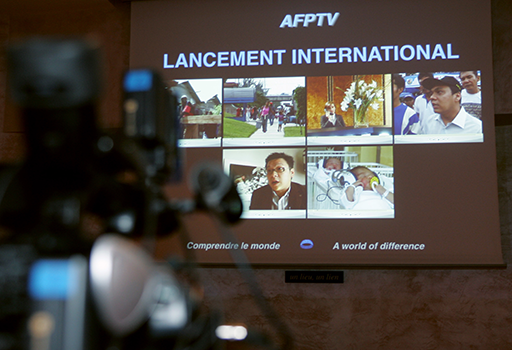
Launch of AFPTV international and a video platform. A development plan is rolled out globally with the creation of production hubs in Rio de Janeiro, Istanbul, Bangkok, Beijing, New Delhi, Nairobi and Cairo.
© AFP
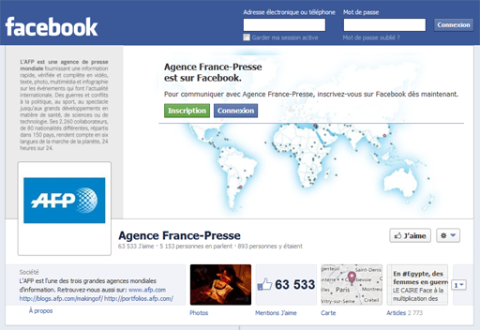
AFP launches its official Facebook page, the first social network to host an AFP account.

© AFP
AFP becomes the first global news agency to offer videos in high definition (HD). AFPTV production is available in the agency’s six languages: French, English, Spanish, Portuguese, German and Arabic, as well as in Polish, Japanese, Chinese, Italian and Urdu through partnerships.

© AFP
AFP launches new multimedia platform, AFP Forum: all news in text, photo, video and infographics accessible on a single website.

© AFP
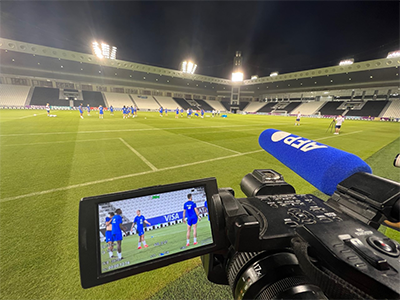
AFP launches AFPTV Live, a new service offering more than 500 live video streams per year.
© AFP
AFP launches a sports news video product.
© AFP
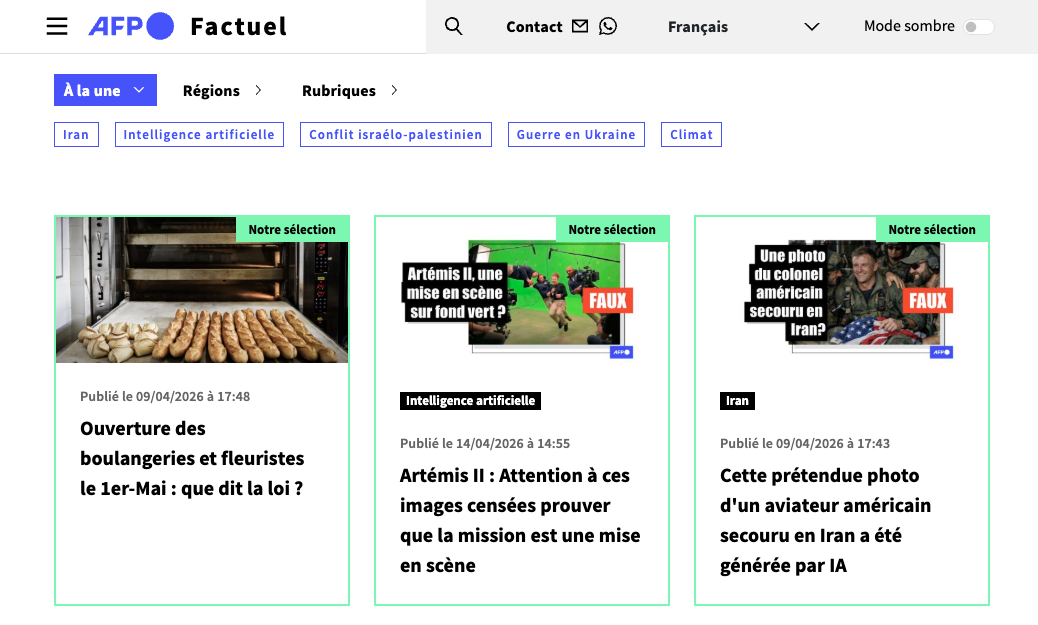
Creation of the digital investigation unit at AFP and launch of AFP Fact Check website, eventually rolled out in 26 languages.

© AFP
Launch of AFP News, a user-centered platform: with an intuitive design, it provides 24/7 access to all AFP and partner content: text stories, photos, videos, videographics, graphics and social stories.

© AFP
AFP continues to launch new products with 'Sur le fil', its first daily news podcast in French.

© Marvin Recinos / AFP
After several months of negotiations, AFP and Google sign a five-year agreement covering payment of neighbouring rights.

© AFP
AFP launches social stories, product combining its best photo and video content in vertical 9:16 format, intended for social networks, in French and English.
© Yasuyoshi Chiba / AFP
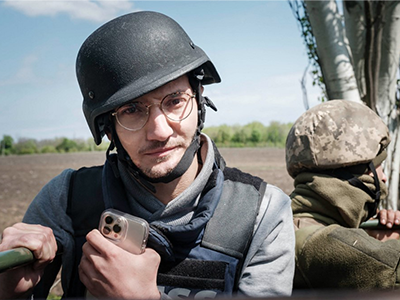
Arman Soldin is killed in eastern Ukraine near Bakhmut. An experienced video journalist, the 32-year-old had been AFP’s video coordinator in Ukraine since September 2022.

© AFP
AFP urges Israeli and Lebanese authorities to conduct a thorough investigation to establish the circumstances and responsibilities in the October 13 attack on a group of journalists that killed a Reuters reporter and injured six others, including two AFP journalists, Christina Assi and Dylan Collins. In December 2023, an AFP investigation showed that the strike that hit the group of reporters came from the Israeli army.

© Mistral AI
This partnership makes it possible to provide all AFP stories to Mistral AI’s chatbot 'Le Chat'.

© ARTE
The documentary film Inside Gaza ('Dans Gaza'), directed by Hélène Lam Trong and produced by FACTSTORY, gives viewers a glimpse into the daily lives of journalists in AFP’s Gaza bureau in the months following the October 7, 2023 attack.