


In Nepal's flood-ravaged Rasuwa district, Yangee Tamang grapples with grief and uncertainty, days after deadly torrents swept away entire villages, leaving a landscape of mud, rock and debris.
From a helicopter flying up the valley of destruction, the ground below resembles a puzzle with missing pieces. Entire sections of settlements have vanished.
Picturesque villages of green paddy fields and houses sit beside vast chunks of land washed away.
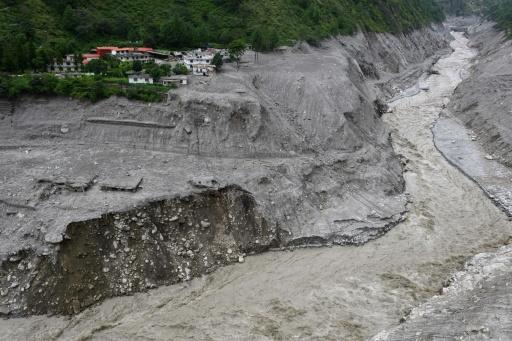
Tamang's house sits on a hillside in Syabrubesi in Rasuwa district, but the flood swept away the settlement below, where her relatives lived and markets were.
"It is all gone, nothing is left. No one is left," Tamang told AFP, after tracing the route of the August 26 destruction by air on Thursday, with roads below washed out.
Rescue teams in Nepal have recovered more than 1,250 bodies, and more than 5,000 are missing, after the gigantic wave triggered by a rock and ice avalanche roared down the China-Nepal border.
What were once busy villages, markets, green hillsides and winding roads in Rasuwa have been transformed into vast stretches of mud, broken rock and debris.
"It wasn't really water, it was gas-like, all black and it moved like boiling water," she said.
"It was all so sudden, it was not possible for anyone to run away."
About 100 people are feared trapped in hydropower tunnels.
Tamang's husband is safe, but his workplace, the nearby Chilime Hydropower Project, which was smashed by the flood.
"I don't know what we will do. Nothing is left here for us to live," she said.
The river, still flowing brown, traces a path of destruction, and the enormous amount of debris has changed the shape and course of the waterways.
The floodwaters, carrying huge quantities of mud and rocks, rushed through river valleys with tremendous force.
In narrow gorges between the lush green hills, soil lies exposed where the flood stripped away trees and grass.
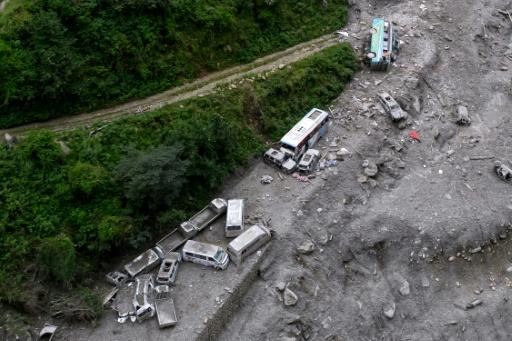
Roads that once connected remote communities have been washed away, while bridges lie destroyed or have completely disappeared.
Vehicles remain stranded on washed-out roads along hillsides.
Along the route, many surviving buildings are buried beneath thick layers of mud.
Some remain standing but are left empty, the people gone.
Risang Tamang, another resident, said for those left, the future is bleak.
"It is difficult -- roads are is such a state, so many bridges have been swept away. Now, even if you have money, there is nowhere to buy anything," he told AFP.
"Any hope that we can live here has died."
Latest stories
Jornal El Niño atual pode ser "o mais potente" em quatro décadas, alerta ONU
O atual episódio de El Niño pode ser "o mais potente" já observado desde que o monitoramento desse fenômeno climático começou, há quatro décadas, alertou nesta quinta-feira (3) a...

Jornal Gloria Steinem, ícone do feminismo e jornalista, morre aos 92 anos
A jornalista e ícone feminista americana Gloria Steinem morreu aos 92 anos, anunciou sua fundação...

Jornal Venezuela 'precisa de muito mais que dinheiro', diz opositora Machado após acordo com EUA
A líder da oposição venezuelana e ganhadora do Nobel da Paz, María Corina Machado, disse, nesta quinta-feira (3), que a Venezuela "precisa de muito mais que dinheiro", após o inédito acordo petroleiro alcançado entre os Estados Unidos e o governo...