


Lawyers for survivors and relatives of people killed when apartheid police opened fire on a 1960 protest launched legal action against the South African government on Thursday, seeking to overturn a law that has blocked compensation claims for more than six decades.
The Sharpeville Massacre became a defining moment in the fight against white-minority rule, exposing apartheid's brutality to the world.
Police opened fire on protesters outside the Sharpeville police station on March 21, 1960, killing 69 people and wounding at least 180, according to official records.
Many were shot in the back as they fled.
They had been protesting laws that required black South Africans to carry a pass book at all times.
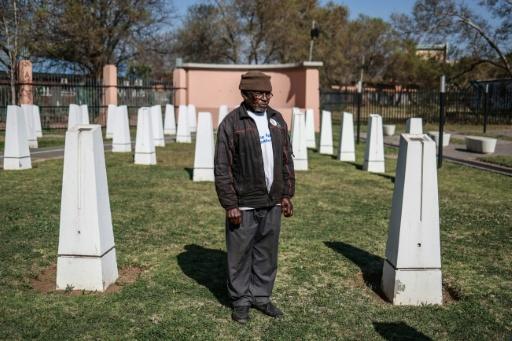
For 87-year-old Abram Mofokeng, who was 20 at the time of the shooting, the memories remain raw.
He struggled to recount the day without breaking down at a commemoration on Thursday, as his daughter and two grandchildren stood beside him, sometimes also in tears.
A bullet struck Mofokeng in the foot and another lodged in his back, where it remains today.
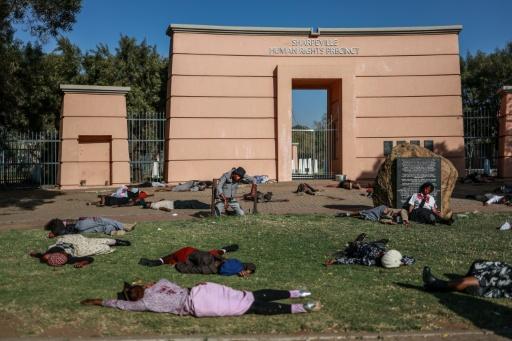
Around him, activists recreated the massacre with dozens painting their bodies red and laying scattered across the grounds of the Sharpeville Memorial, evoking the bloodshed, while nearby protesters sang solemn anti-apartheid songs.
Another group marched with banners towards the police station, where they held a moment of silence.
"The intention was for us to hand ourselves over to be arrested because we didn't carry the pass," Mofokeng said, referring to the passport-like document which restricted black people's movements.
The legal challenge seeks to overturn legislation passed a year after the massacre that prohibited survivors and dependents of those killed from pursuing claims against the state.
"The plaintiffs want to enter into dialogue with the South African government... to discuss appropriate reparations," said Charne Tracey from Lawyers for Human Rights.
"They are under no illusions that they must carry a legal stick if their voices are going to be listened to," she said.
For Mpai Chabane, 39, the legal challenge is also about a loss carried through generations. Her grandmother, Martha Thinane, was among those killed.
"It is really sad and heartbreaking," she told AFP. "They took away our grandmother from us. My mother was only four when she lost her own mother."
"Justice for us would be compensation because we have been waiting since forever."
Sello Theodore, 86, another survivor, said the violence had left him deeply scarred. "My heart is painful and sore," he said.
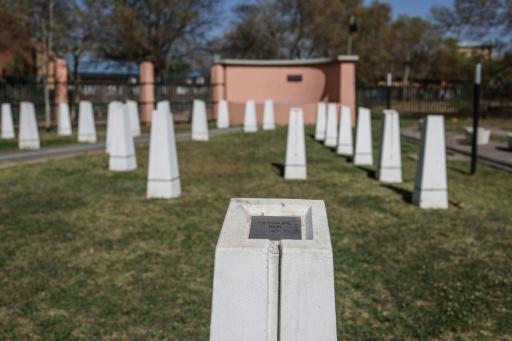
His appeal now is for the government to clean up the ageing township, which is slowly falling into disrepair, and preserve its history.
After apartheid officially ended with the first all-race election in 1994, the day of the massacre was declared Human Rights Day, which is a public holiday.
While official apartheid-era police records put the toll at 69 killed and at least 180 wounded, subsequent research cited by the lawyers found at least 91 people were killed and more than 238 wounded.
Tsoana Nhlapo, 47, a traditional healer and activist born and raised in Sharpeville, said even those figures risk turning people into statistics.
"We continued for 30 years post-apartheid, referring to this day as Human Rights Day. But that then erases the history of what happened here," she said.
Latest stories

Jornal Sánchez inocenta Marrocos, mas defende soberania espanhola sobre Ceuta
O primeiro-ministro espanhol, Pedro Sánchez, insistiu nesta quinta-feira (3) que não há "evidências sólidas" de que Marrocos tenha instigado o fluxo maciço de migrantes para Ceuta no final de julho, mas reafirmou...
Jornal Sobreviventes de massacre de 1960 na África do Sul processam o Estado
Advogados de sobreviventes e familiares de vítimas do "massacre de Sharpeville", que expôs a brutalidade do apartheid sul-africano, iniciaram as ações judiciais contra o Estado por uma lei...
Jornal Chega à Sérvia corpo do criminoso de guerra Ratko Mladic, o 'açougueiro da Bósnia'
O corpo do ex-chefe militar sérvio-bósnio Ratko Mladic, apelidado de "açougueiro da Bósnia", falecido na semana passada em Haia, onde cumpria prisão perpétua por crimes de guerra, será trasladado para a Sérvia nesta...