


The stakes for France's 2027 election could hardly be higher.
For the first time since World War II, a far-right party has a serious chance of taking power in France, the European Union's second-largest economy and its only nuclear power.
Polls project far-right leader Marine Le Pen has her best shot of winning the Elysee Palace on her fourth attempt, as she benefits from one of the most fractured political landscapes in modern French history, with a multitude of candidates vying for support and traditional political forces weaker than ever.
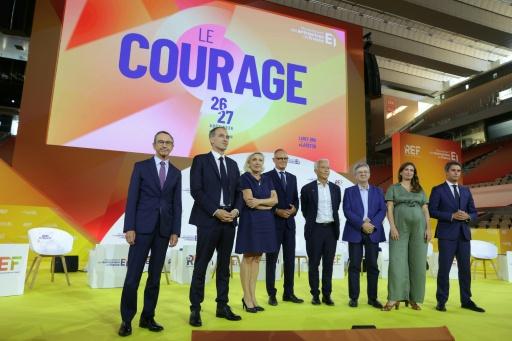
More than 30 declared or potential candidates from the left, centre and right are competing for voters outside the far-right and hard-left camps, eight months ahead of the polls.
Meanwhile, President Emmanuel Macron cannot run again after a decade in office.
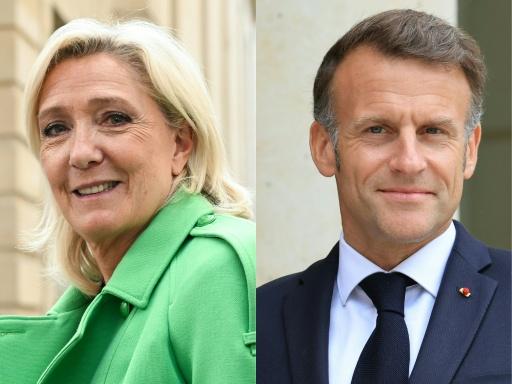
France's two-round system for presidential elections means that moderate candidates risk splitting the vote in the first round if they are too numerous, putting Le Pen in a run-off, likely against hard-left leader Jean-Luc Melenchon which polls predict she would easily defeat.
"Everyone hopes to claim a piece of the pie, although that will prove very difficult," said Emilie Zapalski, an expert in political communication.
Political scientist Remi Lefebvre chalked up the proliferation of candidates to what he called a "Macron effect", with former President Francois Hollande's economic minister getting elected in 2017 without the backing of a major political party.
"That fuels ambitions," said Lefebvre. "People think they too can get elected against the odds."
Over the past decade Macron has reshuffled the political landscape, blurring the traditional left-right divide that has long been a defining feature of French politics.
Polls, which could shift significantly before the election, currently place Le Pen ahead in the first round with about 35 percent of the vote and forecast a runoff victory against any opponent.
The 58-year-old has never appeared closer to power, despite her conviction on appeal for misappropriation of European Parliament funds. She has lodged an appeal with France's highest court.
Edouard Philippe, Macron's first prime minister, is seen as the candidate best placed to unite the centre and right and take on the far right.
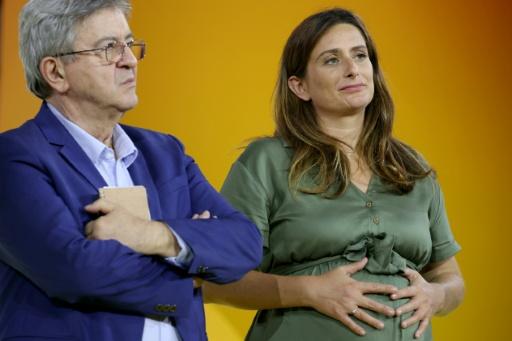
Some polls, however, suggest that Melenchon, the polarising leader of hard-left France Unbowed (LFI), may be better positioned to reach a run-off against Le Pen.
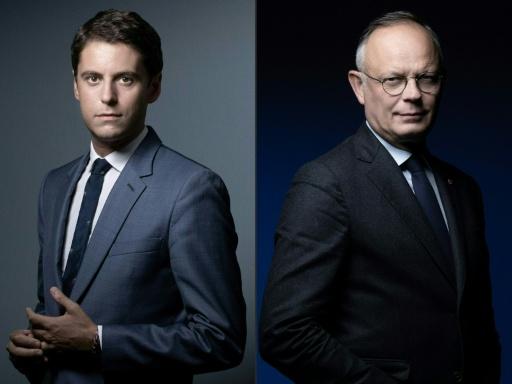
An increasingly bitter battle for the centrist mantle between Philippe and 37-year-old Gabriel Attal, France's once youngest prime minister, has raised eyebrows.
At the weekend, Attal took a swipe at his 55-year-old rival, saying he was campaigning "with ideas from 20 years ago." Philippe retorted that Attal's criticism would be better directed at their political opponents than at members of his own camp.
The two men have signalled they would eventually agree on who is the better-placed candidate to run, but while Attal is open to a primary to select a single candidate, Phillipe says he is not interested.
In an editorial, Le Monde said the decision by Attal and Philippe to both remain in the race was "incomprehensible" and was "motivated more by personal animosity than by genuine policy disagreements".
On the left, contenders keep multiplying but there is no obvious standard-bearer.
"There have never been so many parties on the left, and never so many weak left-wing parties," said Lefebvre. "There is no clear leader."
The Socialists and Raphael Glucksmann's Place Publique are planning to hold a primary in October. Glucksmann, 46, appears best placed to emerge victorious, polling between 10 percent and 15 percent, while Socialist leader Olivier Faure trails behind in the single digits.
Others like Macron's predecessor Hollande are waiting in the wings, hoping for a chance to emerge as consensus candidates in the coming months.
Blanche Leridon, director of French studies at the Paris-based Institut Montaigne, said the candidates must develop credible platforms based on France's future rather than merely respond to the proposals put forward by the far right and hard left.
Le Pen and Melenchon are clearly defined, and are "spared the poison of division" because they face no challenge within their camps, she said.
"A political project that is built solely in opposition to, or as a reaction against, the extremes loses much of its persuasive power."
Zapalski said few knew what political forces would prevail. "France is entering a period of uncertainty, even chaos."
Latest stories

Video Galeria 10 desaparecidos após naufrágio de navio de carga na costa da Turquia
As autoridades turcas informaram nesta quarta-feira que equipes de resgate buscam pelos 10 membros da tripulação de um navio de carga que naufragou após colidir com outra embarcação no Mar...

Video Galeria Epidemia de ebola na RD Congo provocou mais de 3.000 mortes
O avanço da epidemia de ebola na República Democrática do Congo já foi responsável pela morte de mais de três mil pessoas, em um total de 6.200 contágios confirmados, revelando uma taxa de letalidade de quase 50%. O surto já atingiu seis províncias e é provocado por uma cepa para a qual ainda não...
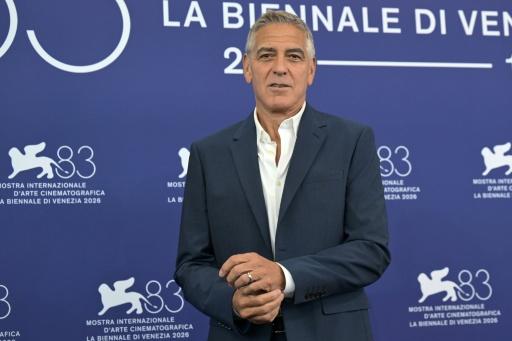
Arte e Cultura EUA é governado pelas 'pessoas menos capacitadas', diz George Clooney
Os Estados Unidos estão sob uma "caquistocracia", ou seja, governados pelas "pessoas menos capacitadas", disse nesta quarta-feira (2) o astro de Hollywood George Clooney sobre seu país e...