


The World Bank on Wednesday warned that global commodity prices were set to increase by 23 percent by the end of 2026, with energy prices at four-year highs due to the war on Iran and food prices driven up by global conflicts and El Nino.
"Commodity markets are being hit by several major shocks at once," said Ayhan Kose, the World Bank's deputy chief economist, in a statement accompanying the release of the organization's Commodity Markets Outlook report.
"Higher energy costs and trade disruptions are driving up prices across a broad range of commodities, threatening to worsen inflation, food insecurity, and economic growth."
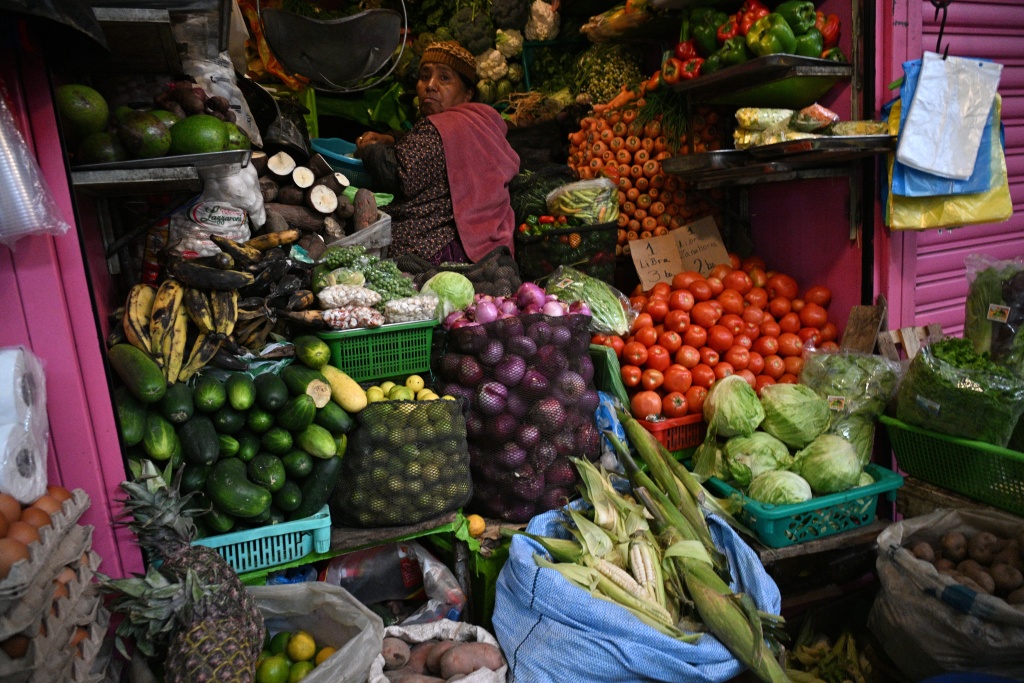
Food prices were expected to rise by 10 percent in 2026 and another seven percent next year, due to conflict-affected grain supply lines, the effects of an extreme El Nino phenomenon and high fuel and fertilizer prices.
El Nino is a naturally occurring weather phenomenon that is set to bring higher temperatures to much of the planet this year, with its impact compounding the effects of man-made climate change.
For food producers, it is expected to lead to more flooding, droughts and heat stress across multiple regions.
Energy prices are projected to see an increase of 32 percent this year before moderating in 2027, the World Bank report said, assuming that conflicts in Iran and Ukraine do not intensify.
Global energy and fertilizer prices have skyrocketed since the United States and Israel launched a war against Iran in late February, plunging the Middle East into violence.
Iran responded with attacks on US allies in the region and virtually choked the Strait of Hormuz -- a key oil, natural gas and fertilizer supply route.
The World Bank report warned that an especially strong El Nino, intensifying attacks on Black Sea grain shipments during the Russia-Ukraine war or further energy price spikes from the Iran war could lead to a "food crisis."
"In an adverse scenario in which these risks materialize together, Brent could average $105 a barrel in 2027 and food commodity prices could be 12 percent higher than expected in the baseline forecast, surpassing their level in 2022," the report said.
Since the start of the war on Iran, the World Bank has provided $8.7 billion in emergency support for vulnerable countries.
"The priority must be to protect the poorest people and support low-income countries already struggling with heavy debt burdens," said Kose.
Global oil supply is slated to fall by 5.2 percent in 2026 -- the largest decline in more than four decades outside of the pandemic -- due to the effects of wars in the Middle East and between Russia and Ukraine.
The report noted that global oil price forecasts would be higher still if oil consumption were not forecast to fall by 2.5 percent this year, the third-largest such drop after the Covid pandemic and the 1980 oil crisis.
Still, the forecasts for food, energy and overall commodity prices were sharply higher from the Bank's earlier predictions in April.
Latest stories

Digital World Meta, Snap head to trial in another case about social media's harms
Jury selection began on Wednesday in Los Angeles for another landmark trial about the alleged harms of social media on young users, with Meta and, for...

US Politics Bolsonaro flees Brazil for US after election defeat
Brazil's defeated right-wing presidential candidate Flavio Bolsonaro arrived in Florida by private plane Wednesday after fleeing his country in defiance of a court...

Sports Hollywood producer Kennedy to head LA28 Olympic ceremony plans
Oscar-nominated film producer Kathleen Kennedy was named on Wednesday to oversee preparations for the opening and closing ceremonies at the 2028 Olympic and...