


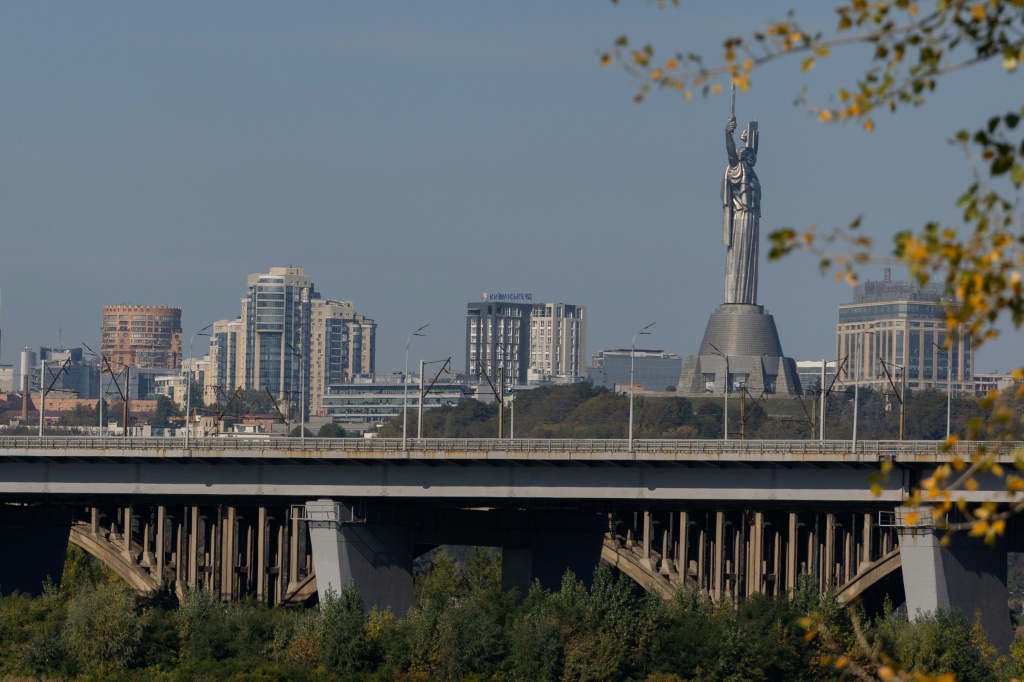
On Monday morning in the war-torn Ukrainian capital, Alina Biriuk was waiting for a bus to take her across the river -- a once-mundane commute that has come under fire from Russian drones.
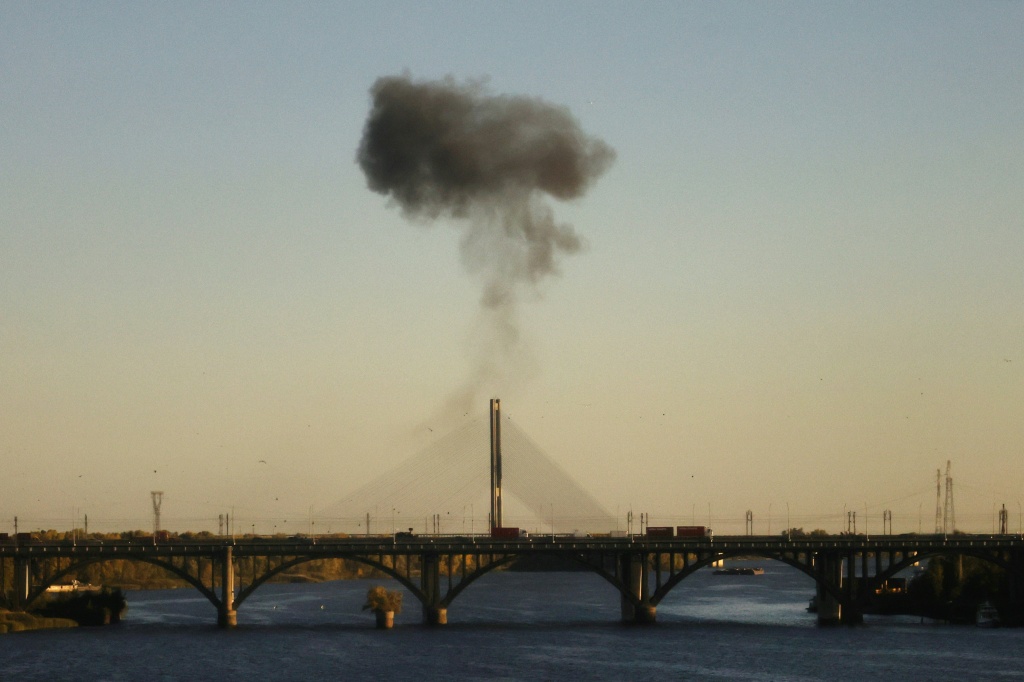
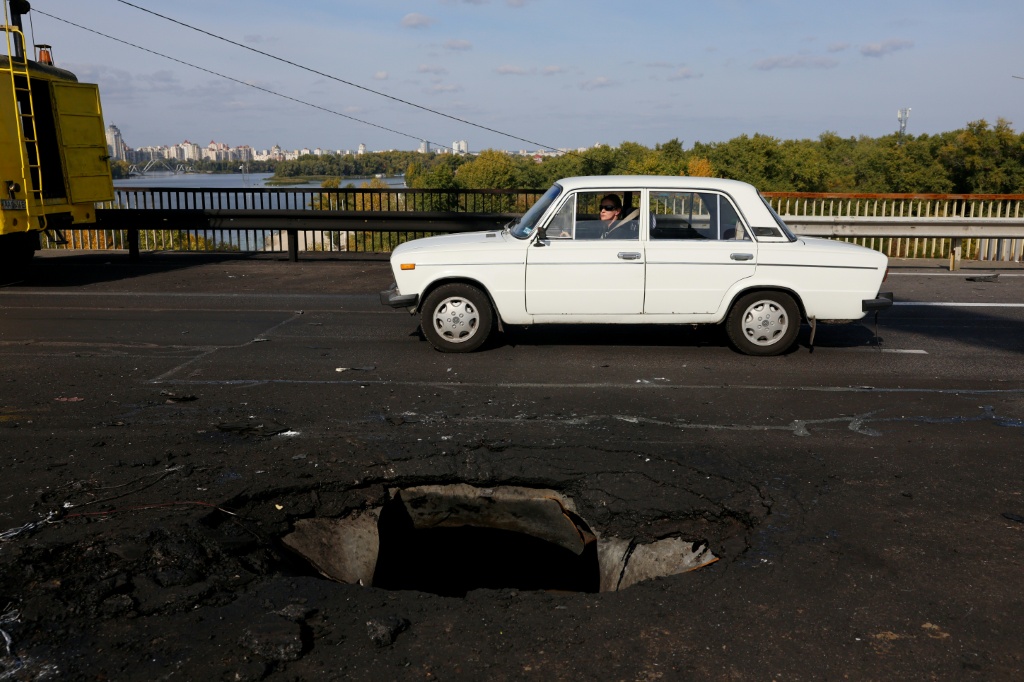
The bridge was hit several times last week in Russian attacks -- the latest shift in Moscow's strategy that has forced Kyiv's residents to constantly adapt how they get around the city.
Biriuk looked apprehensively at the bridge, packed with traffic.
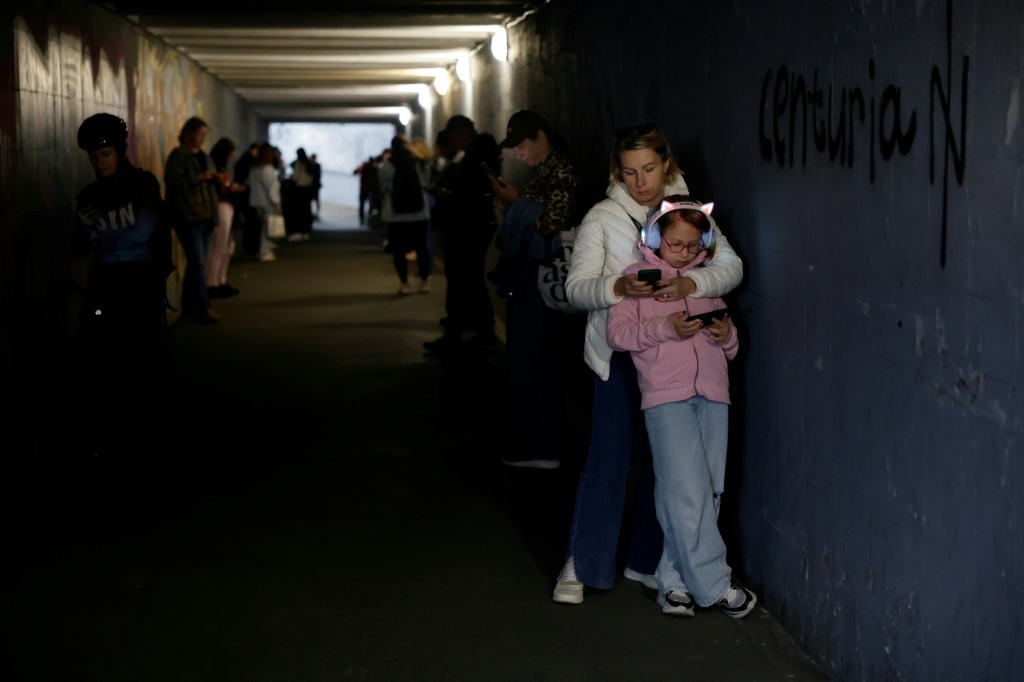
Two days earlier, she had been walking across the bridge when air raid alerts blared, forcing her and her mother to run to the other side.
She remembered trying to sprint, people shouting to hurry as she urged along her mother who struggled with heart pains.
"I told her: 'I don't care if your heart hurts, it'll pass! But if a Shahed drone comes, then it's all over!"
Once safely home, Biriuk gave herself just a day before returning to the crossing -- she had to pick up a new bank card on the other side of the river.
"It's just five minutes, you just have to get to the other bank. People have jobs, studies, some errands," she said.
Carrying on with daily life is more of a necessity than a choice for Kyiv residents, but the challenge is becoming harder.
Kyiv is facing Russian attacks of an intensity unseen since March 2022, according to an AFP analysis of figures from the ACLED conflict monitor.
Kyiv Mayor Vitaly Klitschko warned the city was in a "very dramatic situation" and should now be on a war footing as the enemy was "tearing Kyiv apart".
Moscow over the weekend also called on diplomats and foreigners to leave the Ukrainian capital, prompting Kyiv's allies to accuse Russia of trying to sow panic.
Residents have felt the weight of the new attacks, said local Mykyta Kovalchuk.
"Before, it only happened at night. Now it happens every day, throughout both the day and the night. I hear explosions at home and near my workplace. I see them when I look out the window at home, and at work," he said.
The 28-year-old was having a hotdog for lunch, enjoying a few rays of autumn sun during an unusual lull in air raid alerts.
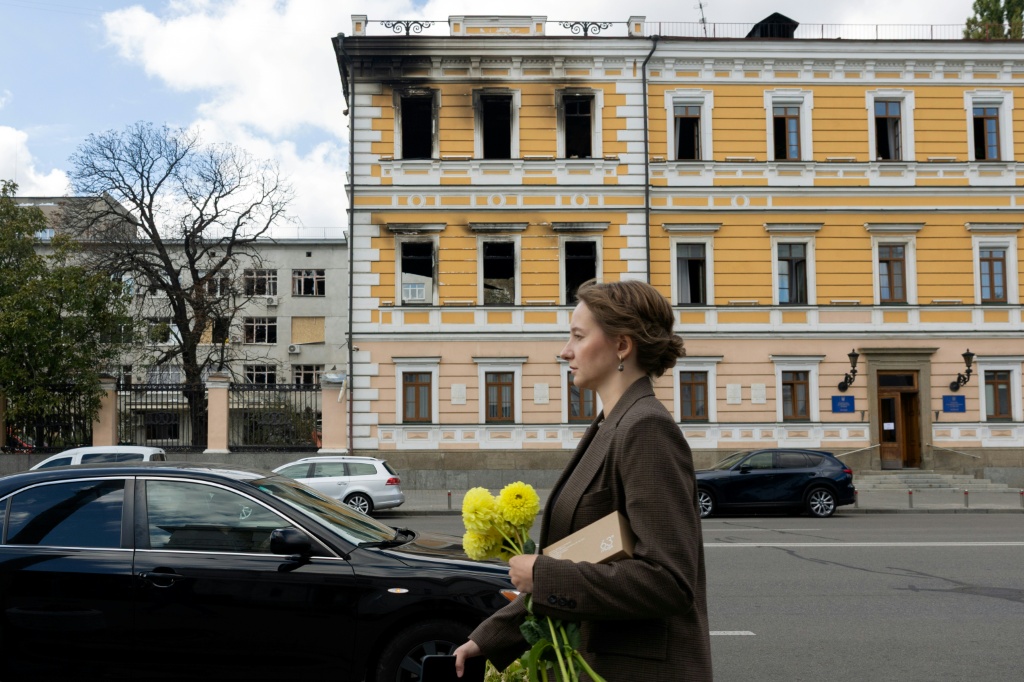
Just a few hundred metres away stood the charred shell of Ukraine's Academy of Sciences, destroyed the week before in a midday drone strike.
Burned-out cars were still parked nearby, where people had stopped to take photos despite the smell of burning still lingering in the air a week on.
"Life is becoming more and more difficult. But we adapt somehow," Kovalchuk said.
The need to constantly adjust has accelerated as Moscow has expanded is list of targets: shopping centres, postal logistics, railways, internet providers, data centres -- and now bridges.
The challenge is particularly acute for businesses, who have struggled to stay afloat through more than four and a half years of war.
Ksenia Dokanova, the 28-year-old manager of a branch of Musafir, a popular Crimean restaurant chain in Kyiv, was busy testing a huge red generator -- crucial equipment to get through the lengthy power cuts expected to once again dominate the winter.
Its familiar rumbling brought back memories of last winter, when systematic Russian attacks plunged Kyiv into darkness and cold for days on end.
Dokanova is now working on an endlessly evolving list of contingency plans for the coming months.
"There might be disruption in food supplies... The worst thing that can happen to a restaurant is if there's no water -- we have backup tanks, but they won't last for long."
After several strikes on telecom providers, her team had started discussing options if internet went down.
She was also thinking about how to get employees and supplies through traffic disruptions, on top of ensuring the safety of her customers.
Though she barely reacts to the increasingly frequent explosions booming out across Kyiv any more, sometimes it's overwhelming.
"At some random moment you sit down on a trolleybus and just start crying."
"In the morning you get ready, and you realise: what's the point of crying? You have to keep going."
Latest stories
Health French-Japanese duo wins chemistry Nobel for solving molecular 'mystery'
France's Henri Kagan and Japan's Kenso Soai on Wednesday won the Nobel Prize in Chemistry for solving the mystery of why only one form of certain molecules appears in nature, a...

Digital World Spotify expands audiobooks to more than 180 markets
Streaming giant Spotify announced Wednesday it is expanding access to its audiobook service to more than 180 markets, up from 22 currently, as the...

Asia Business As sector struggles, Porsche puts luxury ahead of volume
Luxury sports car maker Porsche announced Wednesday it plans to sell fewer vehicles, but at a higher price to try to regain profitability...