


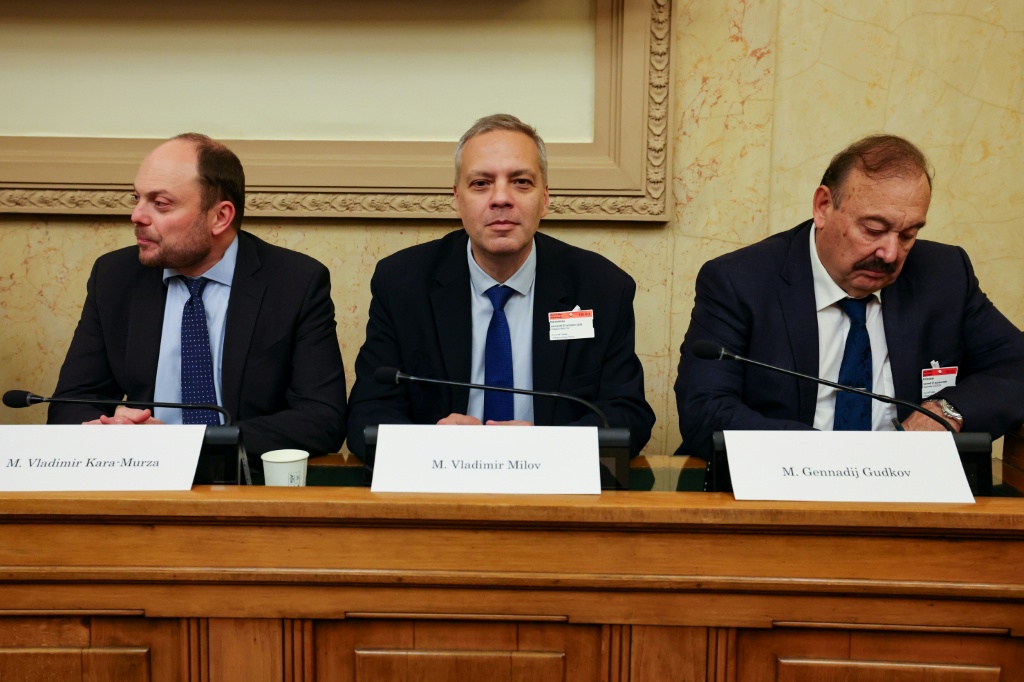
Russian dissidents told the French parliament on Wednesday that an EU move to lift sanctions on oligarch Alisher Usmanov was a mistake that showed Europe could be pressured and urged lawmakers to do more to help free Russian political prisoners.
Last month France drew ire from a number of EU nations and Ukraine by getting sanctions lifted on Usmanov and another Kremlin-friendly tycoon, Mikhail Fridman.
Speaking in the French parliament, exiled Russian opposition politician Ilya Yashin said the decision to remove Russian-Uzbek billionaire Usmanov from the blacklist was a "mistake."
He said the Russian opposition understood it was driven by French national interests but had "nevertheless caused great disappointment and demoralisation among supporters of democracy in Russia."
"We believe it demonstrated Europe's weakness. It sent a signal that Europe can be pressured into easing sanctions."
Usmanov, 73, and Fridman, 62, were added to the EU sanctions list after Russia's invasion of Ukraine in 2022 over allegations their businesses provided significant revenues to the Kremlin.
Usmanov's case was linked to the release of Martin Ryan, a Frenchman jailed in Azerbaijan on espionage charges.
In a sign of the importance of the case for France, the head of the DGSE foreign intelligence agency, Nicolas Lerner, accompanied Ryan on his trip home, an informed source told AFP.
"There are times when difficult decisions have to be made," Yashin said. "But in such situations, it is necessary to at least raise the cost.
"What is profoundly disappointing is that Usmanov's removal from the sanctions list did not lead to the release of a single Russian political prisoner," Yashin said, claiming that a possible release of Russian political prisoners was not discussed.
"That is deeply disappointing, despite all due respect for France."
Another Kremlin critic, Vladimir Milov, said Usmanov was "capable of causing enormous harm to the national security of France if he remains exempt from sanctions."
"I do not think everyone in France fully realises this fact," said Milov, a former Russian deputy energy minister.
With other Kremlin critics, Yashin and Milov spoke at an event aimed at building bridges between French lawmakers and members of Russia's exiled opposition.
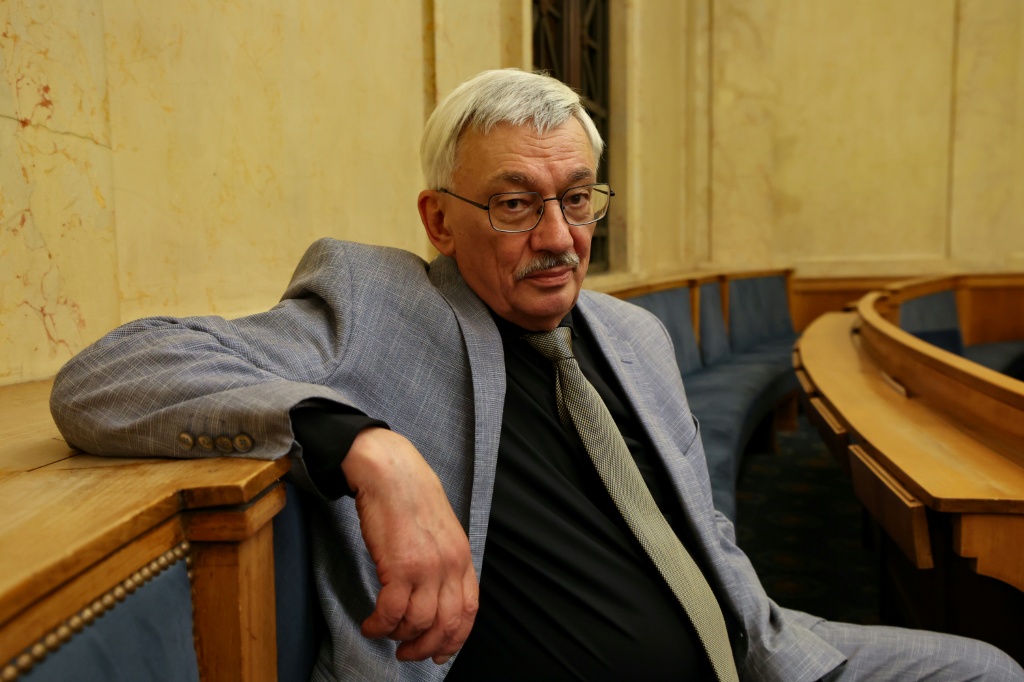
Rights campaigner Oleg Orlov said more must be done to win the release of political prisoners.
"While there is still a chance, we must save at least some of those who will not survive imprisonment," said Orlov, co-chair of Memorial, the Nobel Peace Prize-winning human rights organisation.
"It would be very important for members of parliament to take symbolic responsibility for specific political prisoners, to monitor their fate, and to speak about them publicly."
Memorial lists more than 1,800 political prisoners in Russia, but according to the rights group around 5,700 people are held or prosecuted for political reasons.
Former lawmaker Gennady Gudkov said some members of Moscow's elite understood that "Putin is becoming a problem."
"They understand that Putin is leading them into a dead end," he said, adding that he had met some of them this summer.
"But what do they say? 'We have no exit strategy'," Gudkov said, adding they did not know whom to talk to in the West.
Milov countered that the elites were consumed by fear and should not be regarded as independent players.
"I see that the level of fear among them is much higher than among ordinary Russians."
Citing one acquaintance, Milov said some were afraid to express discontent even in private.
"Of course, we are all very unhappy about what is happening, but we are afraid to even discuss how unhappy we are with Putin," he said he had been told.
Latest stories
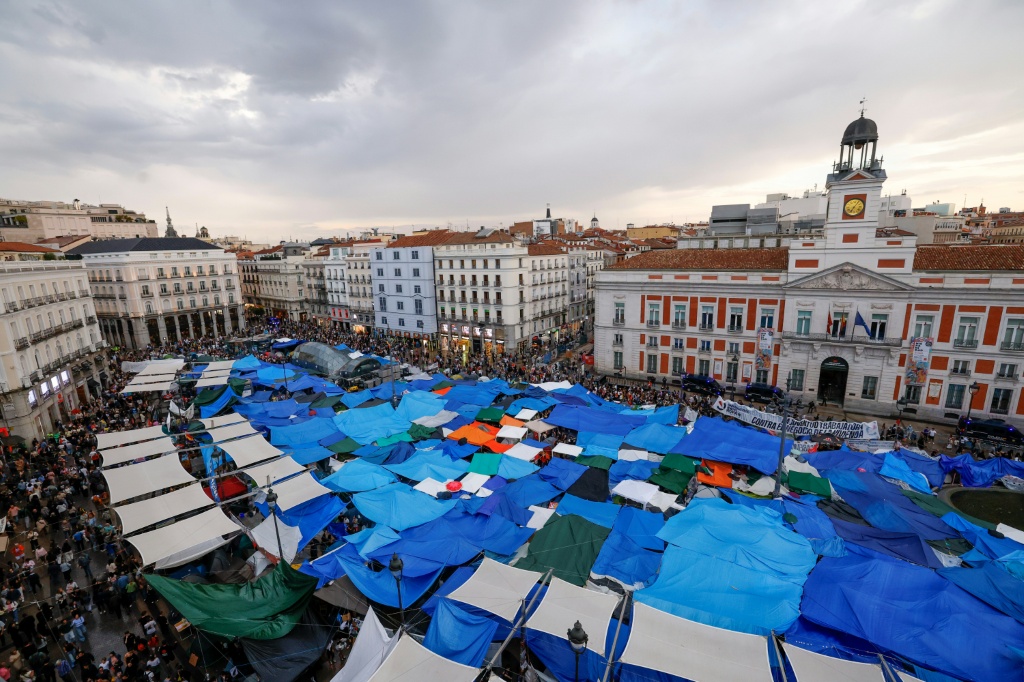
European Edition Spanish unions call Nov 11 general strike over housing, wages
Spain's main unions on Wednesday called a general strike for November 11 with the aim of ratcheting up pressure over housing and wages...
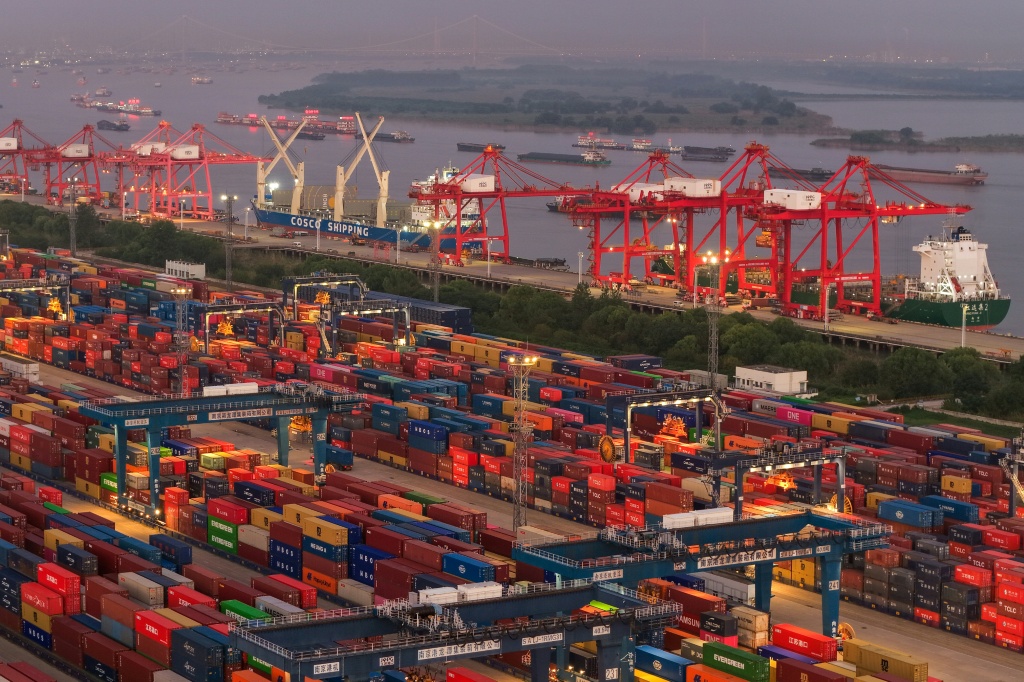
Europe EU trade chief seeks to dial down China tensions
The European Union's top commerce official was due in China on Thursday for talks aimed at bringing both sides back from the brink of...
Offbeat Lula, the president without a cellphone, turns to selfies to woo voters
Brazil's President Luiz Inacio Lula da Silva does not own a cellphone and has long mocked...