


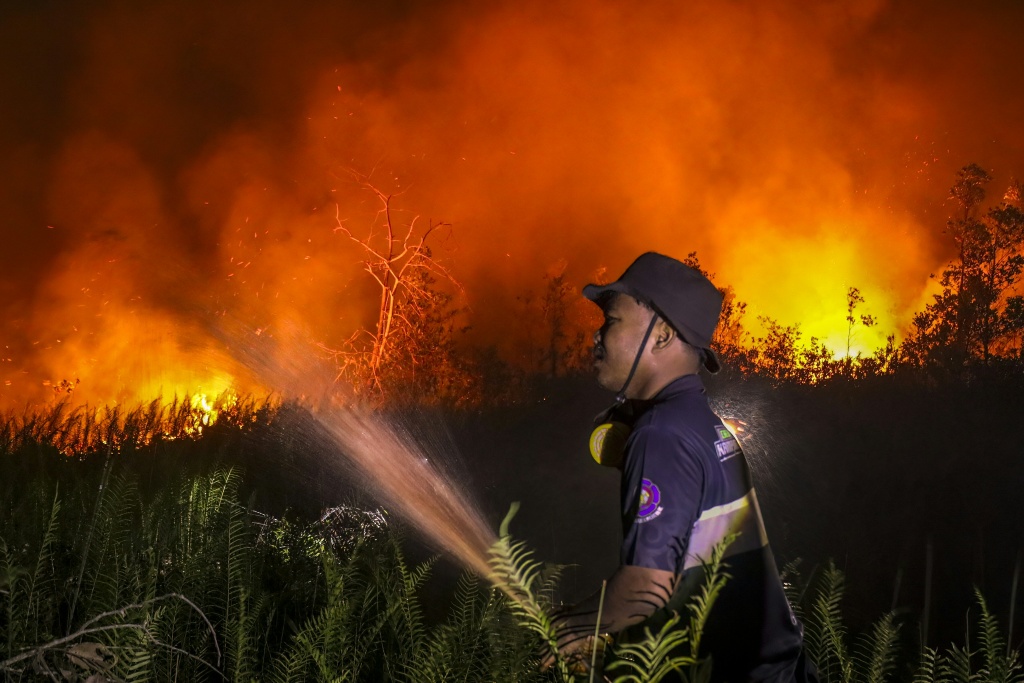
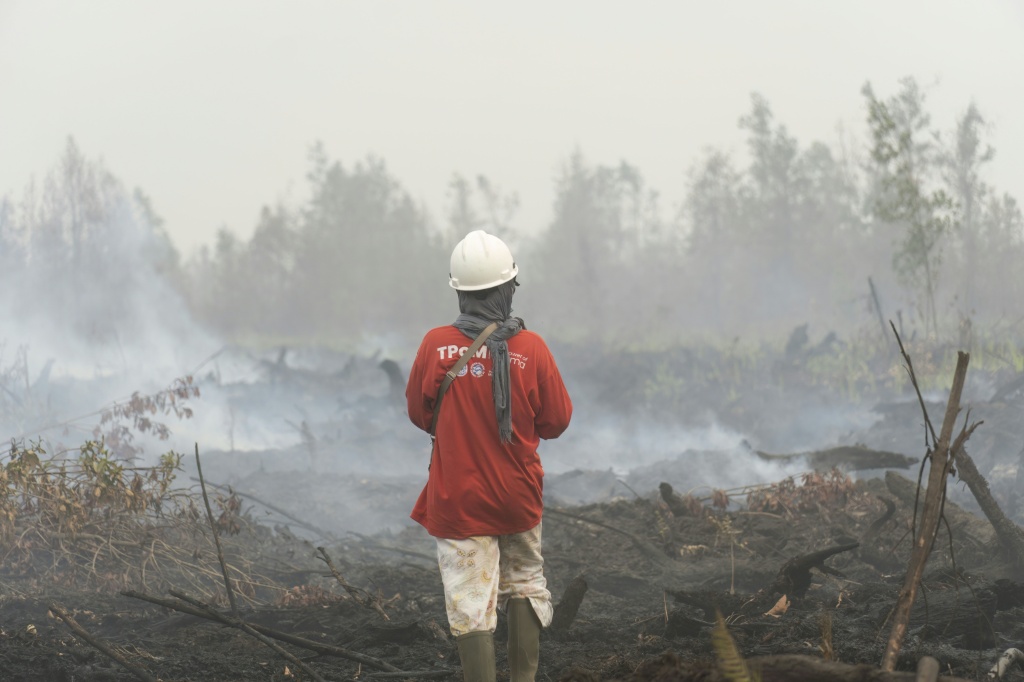
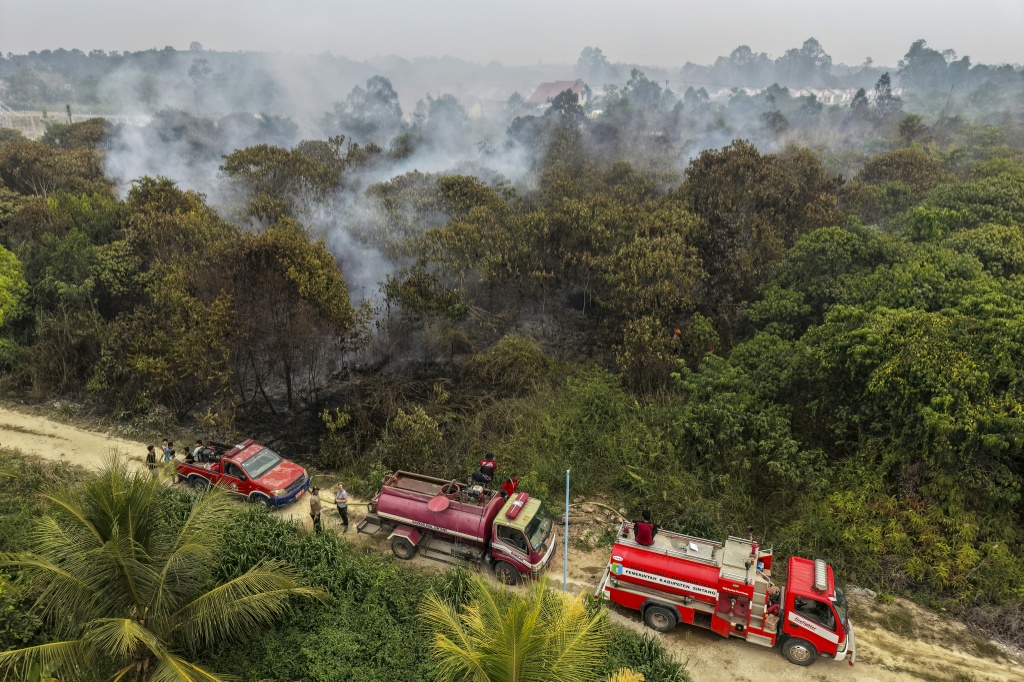

For weeks on end, parts of Indonesian Borneo have resembled an Armageddon landscape with masked residents immersed in a putrid, red-brown haze as wildfires devour peatlands near homes and farms.
Burning slowly, mostly under the surface and sometimes for months on end, peatland fires are responsible for much of the dry season haze that this year has tainted air as far afield as Malaysia, Singapore and the Philippines.
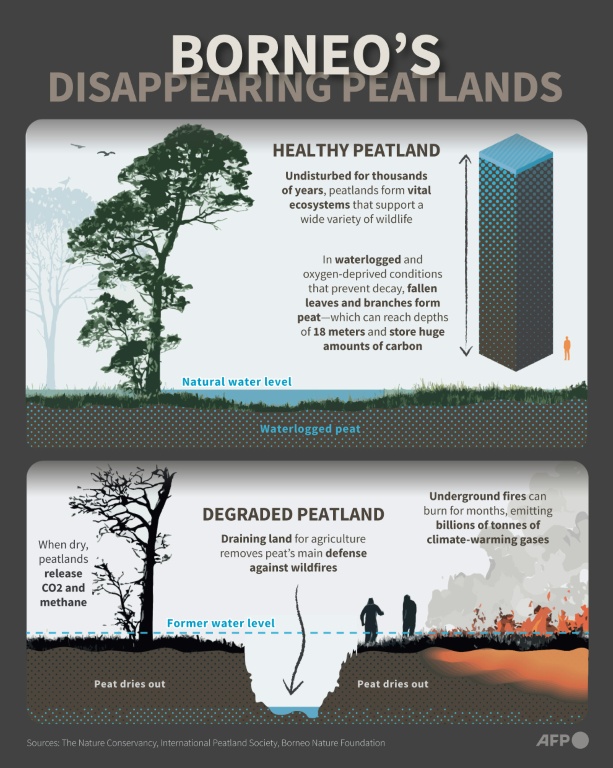
Peatlands are composed of organic material that does not completely decompose in water-logged conditions and has settled over thousands of years into a layered soil-like substance.
Healthy peatlands are home to diverse plants and trees like nutmeg and durian, and animals that can include endangered orangutans, clouded leopards, Sumatran tigers, sun bears and tapirs.
They are porous and absorbent, making them critical for flood containment.
While they cover only about three percent of global land, peatlands store about a third of the world's soil carbon -- double that trapped by forests.
Indonesia has the world's biggest share of tropical peatland, about a third of the global total.
Of Indonesia's estimated 24.2 million hectares (93,400 square miles) of peatland, 16.4 million hectares have been degraded and are vulnerable to fire, according to the Pantau Gambut NGO.
The culprit is mainly industrial-scale plantations for timber, pulp and paper, rice paddies and palm oil, of which Indonesia is the world's biggest producer by far.
To cultivate peatlands, they are drained with canal networks that in Indonesia span about 285,000 kilometres (177,000 miles), according to Pantau Gambut research -- seven times the circumference of Earth.
The water runs into rivers or the sea, leaving the dried-out peatlands vulnerable to burning, especially in strong El Nino years that can bring severe drought to Indonesia.
Peatland fires are often imperceptible but for the foul smoke they emit and the heat they generate underfoot.
The many layers of thick carbon can keep smouldering in "zombie fires" for weeks, and are hard to put out.
While less than a third of wildfires in Indonesia are on peatlands, they produce most of the haze, according to Greenpeace research.
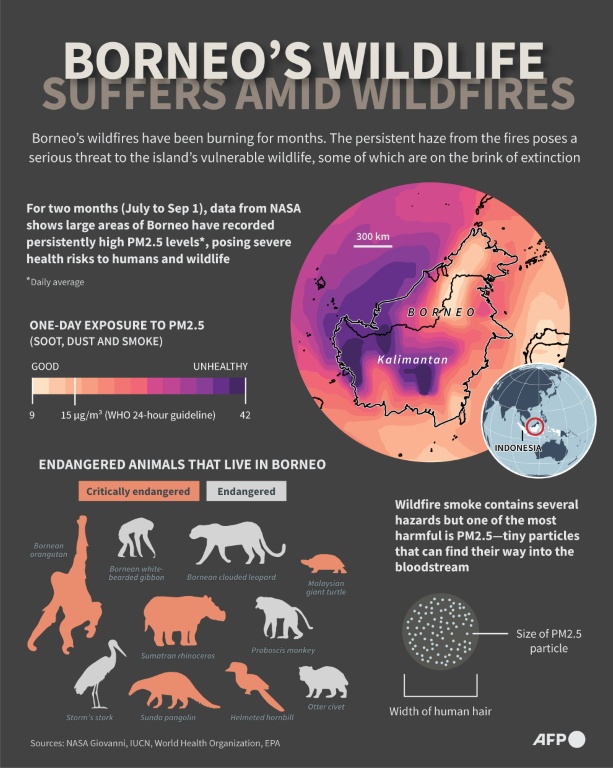
This toxic smog contains harmful elements including formaldehyde, hydrogen cyanide and ammonia, as well as PM2.5 particles small enough to penetrate the lungs or bloodstream.
The World Health Organization has linked PM2.5 exposure to increased illness and death.
Indonesia and Malaysia have shut hundreds of schools over haze, and more than 170,000 people in Indonesia required treatment for acute respiratory infections in August and September, according to the health ministry.
Many more fell ill in Malaysia and Singapore.
Peatland fires also ravage the habitats of animals, further imperilling already endangered species such as orangutans and Sumatran rhinos.
By October 6, Indonesian wildfires had emitted 140.5 megatonnes of planet-warming carbon, around 13 percent of the global total this year, according to the Copernicus Atmosphere Monitoring Service.
That was the highest figure for Indonesia fire emissions since 2019, another strong El Nino year.
Indonesia emits significant greenhouse gases from its coal-powered electricity grid, and is seeking to reduce its emissions in part by relying on forests, peatlands and other land ecosystems to absorb more than they emit.
Activists and experts say concession licences for extractive activities on peatlands must be revoked, and peatlands should be rewetted and planted with native species.
Canals should be blocked, they say.
Indonesia has a moratorium in place on new permits to clear 66 million hectares of land designated as primary forest and peatland.
In a statement last year, the government said it had rewetted 4.16 million hectares of peatland, built 45,000 canal barriers and replanted various native species.
But there are doubts about some of that work.
"Today, some of the peat hydrological units that have received major restoration efforts... have experienced fires and have some of the highest hotspot counts," Greenpeace forest campaigner Belgis Habiba told AFP.
Last month, the government announced the creation of a new National Peatland and Mangrove Management agency to replace a body whose mandate expired in 2024.
The agency's remit and resources are still being worked out, but there are concerns its name mentions neither restoration nor protection.
"Does managing in this context serve as a pretext for the state to grant new concessions on peatlands?" asked Belgis.
The forestry ministry did not reply to AFP's request for input.
Latest stories
Climate and Environment Malaysia's Firefly extends flight cancellations due to haze
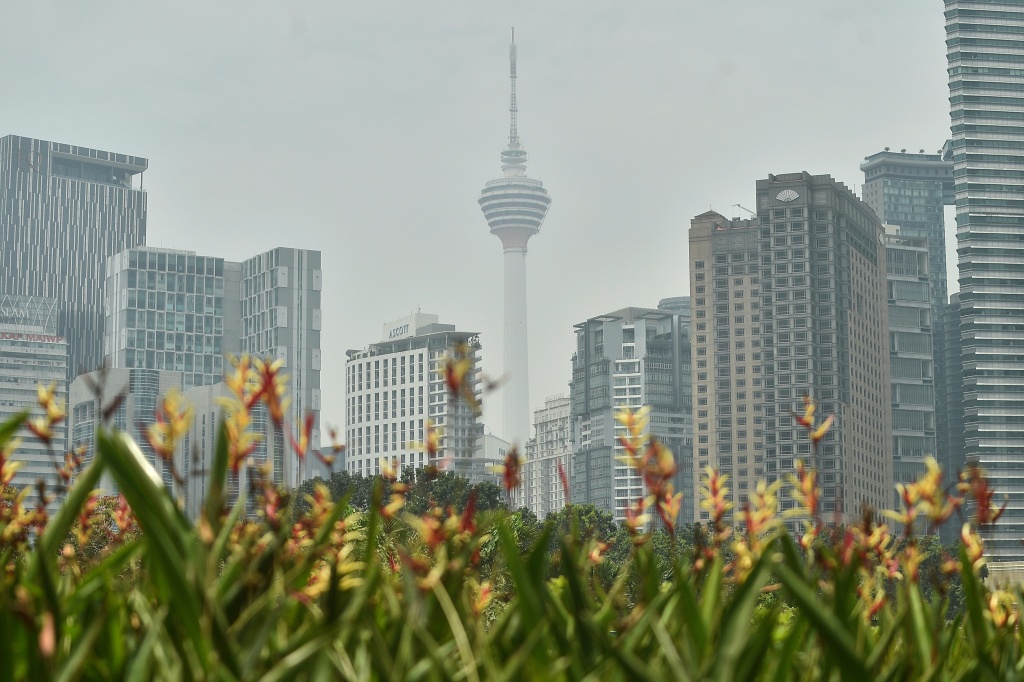
Malaysian low-cost carrier Firefly extended cancellations of flights between Kuala Lumpur and Singapore until Wednesday, the airline said, as haze from fires in neighbouring Indonesia...

Arts and Entertainment 'Breaking Bad' actor RJ Mitte dead: representatives
RJ Mitte, the young actor best known for playing Walter White Jr. in the award-winning TV series "Breaking Bad," has died, his representatives told...

Asia Business Seoul, Tokyo stocks plunge as Asia suffers fresh tech rout
Seoul, Tokyo and Taipei led losses across Asian stock markets on Tuesday as technology firms plunged on fresh worries about the outlook for the AI investment boom, with traders preparing for a crucial earnings...