


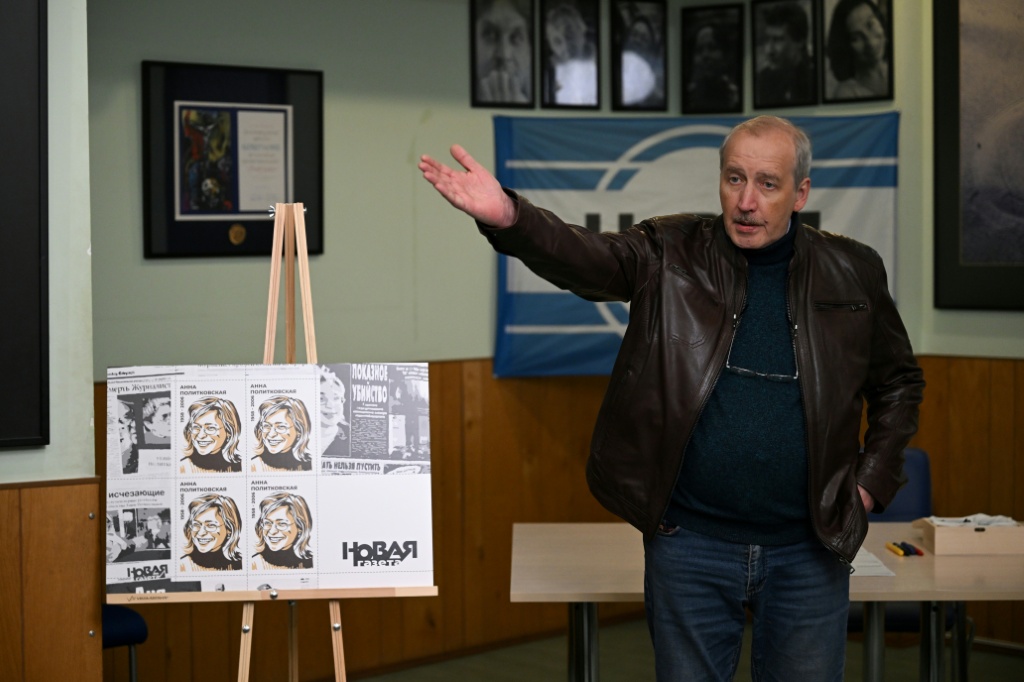
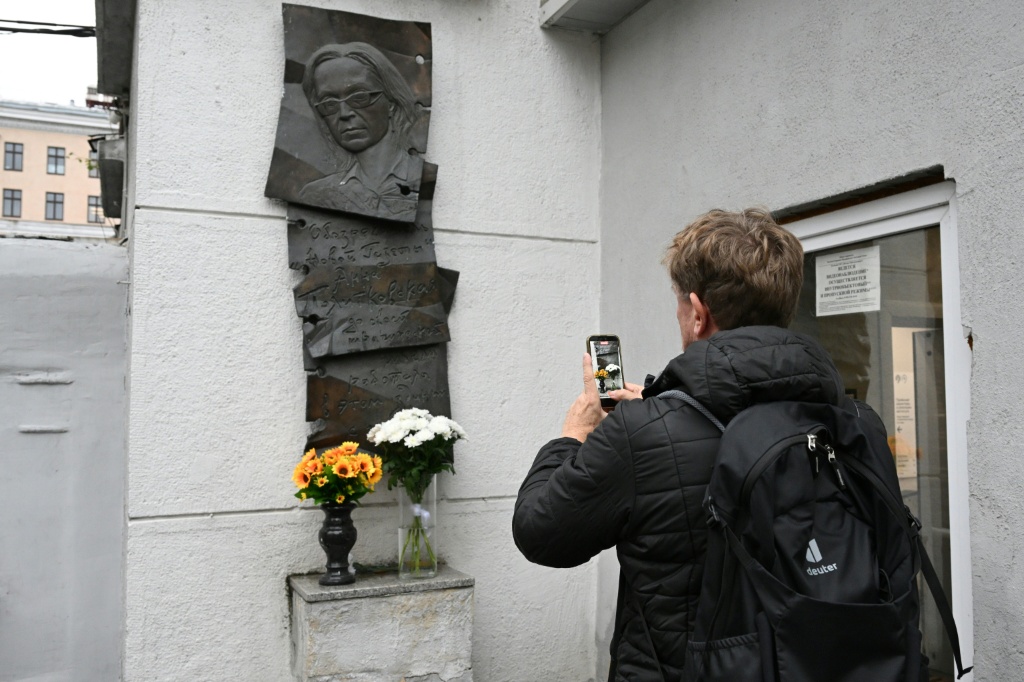
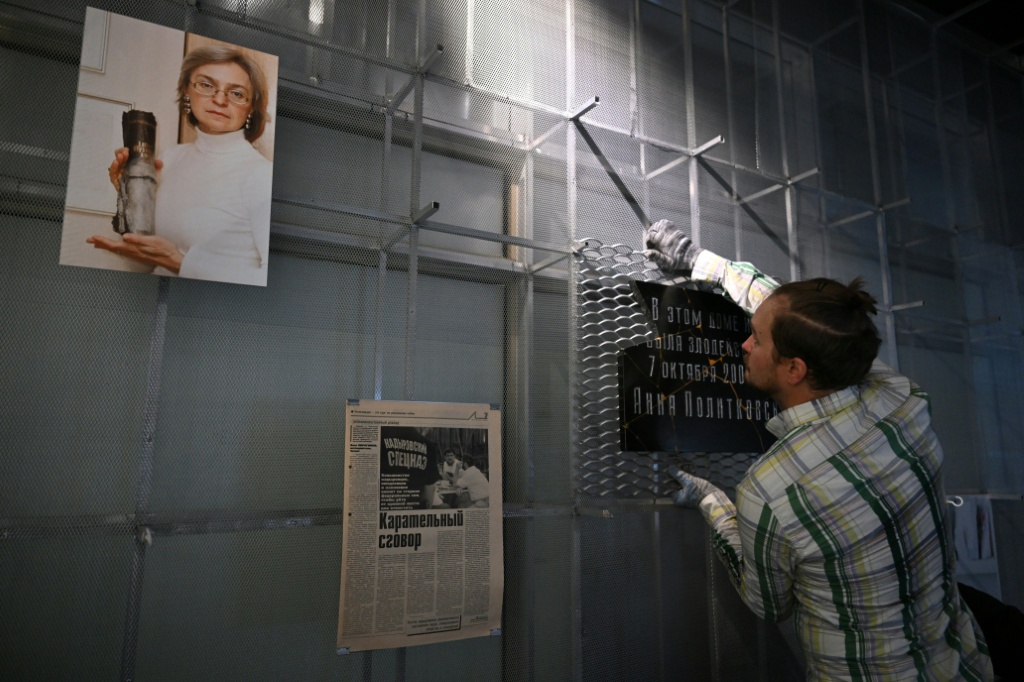
Assassinated Russian reporter Anna Politkovskaya, shot dead outside her Moscow home in 2006, had "predicted" Russia's trajectory under Vladimir Putin, her editor told AFP as Russians marked the 20th anniversary of her death.
Politkovskaya had reported fearlessly on the war in Chechnya and the rise of Putin, warning of his authoritarian tendencies at a time when he was being welcomed and courted in the West.
She was gunned down in the lift of her central Moscow apartment block on October 7, 2006 -- Putin's 54th birthday.
Her killing marked a turning point for Russian journalism.
Two decades on, Putin is still in power, Moscow's war against Ukraine -- which has killed hundreds of thousands -- is in its fifth year, and domestic repression has reached levels not seen since the Soviet era.
"Everything that is happening with Russia was predicted by Anna Politkovskaya in the books she published before her death," Sergei Sokolov, the legendary reporter's editor at the Novaya Gazeta newspaper where she worked, said.
Moscow has labelled her paper, Novaya Gazeta, a "foreign agent".
"At the time, nobody believed her and they said she was exaggerating the dangers and fears," Sokolov said.
As the West embraced Putin in the early 2000s -- a strongman leader cautiously welcomed after the chaos of the previous decade -- Politkovskaya warned Russian journalists would have to show "total servility to Putin" or face death or prison.
Russia, she said, was "hurling back into a Soviet abyss".
The gunmen behind her murder are in prison -- but the person, or people, who ordered the killing have never been named.
Asked about that in 2021, Putin said his agencies "did everything to uncover these crimes".
In death, Politkovskaya has become an even more totemic figure for Russian journalists -- inspiring a generation of investigative reporters who she never met, and who are now forced to work in exile.
With Russia at war in Ukraine, her reporting from both sides of the frontline in the Chechen wars has taken on fresh relevance.
She covered war crimes committed by both the Russian army and Chechen rebels and pushed both to evacuate civilians.
In 2002, she walked into a Moscow theatre that had been seized by Chechen rebels to try to secure the release of hostages.
"The terrorists had chosen me as a person they wanted to talk to, I couldn't refuse," she later said.
More than 130 hostages would be killed when special forces gassed the theatre and stormed the building.
"What stood out in her was her tenacity -- nothing could make her stray from the topic or idea she had," Sokolov, her editor, recalled.
That school of journalism now lies in virtual tatters.
Years of pressure from the Kremlin has culminated in censorship levels unseen since the Soviet Union.
If Politkovskaya were alive, Sokolov was certain: "she would definitely not be able to stay silent".
In her latter years, Politkovskaya had become a fierce critic of Ramzan Kadyrov, then being groomed as the future head of Chechnya.
She dubbed him a "little dragon" and accused him of being given a free hand to brutally rule over the war-torn region in exchange for loyalty to the Kremlin.
Kadyrov in turn called her an "enemy of the Chechen people", vowing she would "answer" for her criticism of him.
Reporters Without Borders said Wednesday that Politkovskaya's writings were "startlingly contemporary".
Despite her name being virtually erased in Russia's official narrative, Politkovskaya remains an icon for independent Russian journalists -- but also a constant reminder of the dangers of her profession.
"You need an example. If there was no example of courageous journalists and if everyone kept their heads down, then things will be even worse for Russian journalism," 28-year-old exiled reporter Yegor Feoktistov said.
"Her fate always reminds you of what can happen -- but it also gives you courage."
Another investigative journalist forced to work in exile, Olga Churakova, said she is "surprised by the stream of people who want to become journalists" in Russia despite the dangers.
Many mention Politkovskaya as their inspiration.
"She wasn't afraid to speak her mind and say things as they were," said 18-year-old Vladimir, attending a memorial for Politkovskaya in Moscow.
"I feel her absence now."