


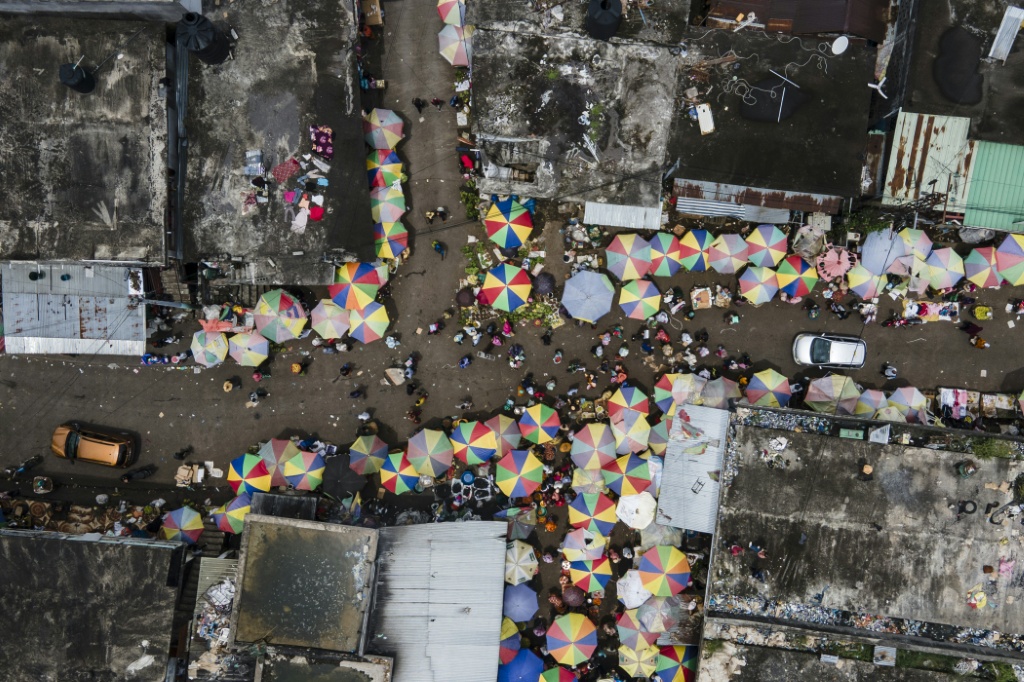
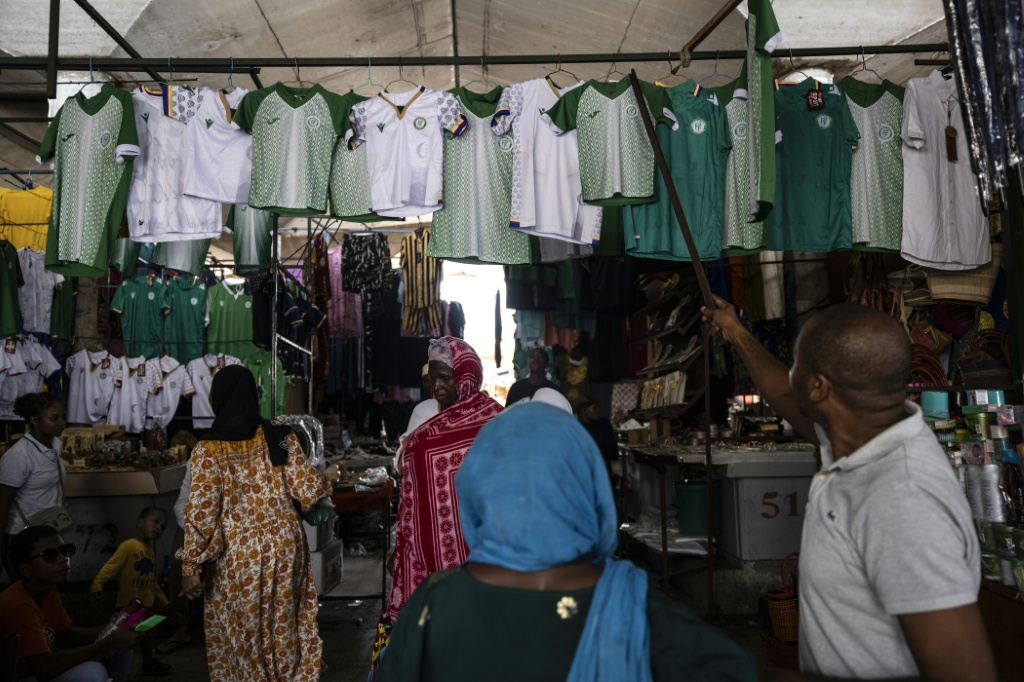
Like many Madagascar nationals settled in the Comoros, Larissa Razafitiana has a stall along the main road leading to the country's largest market, Volo Volo.
She sells shoes, earning enough to be able to send 50 to 100 euros ($56 to $112) a month to her family back in Madagascar's small town of Ambilobe.
But since a new law promulgated in July banning foreign nationals from certain jobs in the Comoros, the 37-year-old is worried about the future of this fragile arrangement.
"I'm very afraid," she told AFP. "If I'm banned from trading, where will I find money?"
The law published on July 21 reserves certain small-scale commercial activities exclusively for people who are Comorian by birth.
Although it is not yet enforced, it has alarmed many among the 20,000 Malagasy living in the Comoros, the largest foreign community in the islands.
The vast majority are women who have come to earn a living.
While around 45 percent of the population of the Comoros islands lives below the poverty line, this rises to 75 percent in Madagascar, according to the World Bank.
Other countries in the region are also taking steps to exclude foreign nationals from jobs.
In 2025, Tanzania banned foreigners from owning and operating certain businesses in around 15 sectors.
A similar idea has been floated in Kenya, where President William Ruto's remarks in September against foreign "hawkers" sparked panic and some violence.
In South Africa, populist movements ignited a wave of protests against undocumented immigrants earlier this year, mainly accusing them of taking jobs from locals.
Small foreign-run businesses were a particular target in the unrest, which led thousands of foreign nationals to leave, some aided by the government in its crackdown against illegal migration.
In the Comoros, supporters of the new law emphasise "economic sovereignty" and the "defence of Comorian citizens".
"If a small neighbourhood business has to be opened, we don't need foreigners in this sector," said Hamidou Mhoma, vice president of employers' organisation Nouvelle Opaco.
"The law is neither xenophobic nor discriminatory; it is a law of social justice," he said. "The country has the right to choose the type of investors who should come here."
But prominent lawyer Faizat Said Bacar said making the Malagasy working in the country "illegal" would only drive them further into precarity.
It will affect a "very large number of Malagasy women who, even before coming to the Comoros, were already relatively precarious in their own country, with little support", said Bacar, deputy head of the Moroni bar and leader of feminist association Bora.
"Putting them in a position of illegality... depriving them of legal income, will reinforce this vulnerability," she said.
Another criticism is that the law excludes people who have earned Comorian citizenship through naturalisation.
"The republic guarantees equality of all citizens before the law, without distinction of origin," said public law scholar Mohamed Rafsandjani.
"One can debate, from an economic and political standpoint, how effective the measure is, but there is clearly a xenophobic dimension," he said.
Relations between the two Indian Ocean nations have been tumultuous for years.
Direct flights between their capitals only resumed in July after a five-year break prompted by a dispute linked to the trafficking of gold bars from Madagascar via Comoros to Dubai.
In August, hundreds of members of the Malagasy community gathered in a Moroni stadium to demand, among other things, Madagascar diplomatic representation in the country.
While in previous years, Malagasy immigrants included teachers, construction workers and doctors, more recently they are mostly fruit and vegetable sellers or hairdressers -- the kinds of jobs targeted by the new law.
For these workers, part of the attraction of the Comoros islands is that remittances to Madagascar are in euros, to which the Comorian franc is pegged.
"For Malagasy who are back home, the Comoros is like France," said Malagasy community leader Moussa Ravelomantso.
"Especially since when money is sent, it's sent in euros. For them, there is a lot of money here."
Economic hardship has in turn led many Comorians to join the stream of migrants that head to the neighbouring island of Mayotte, a French territory on the way to Madagascar.
More than 50 years ago, it was Comorians who were going to Madagascar for work, said Ravelomantso, recalling his own experience in the city of Majunga in the island's northwest.
"The Comorian community was accused of stealing jobs from Malagasy people," he said. "Under pressure, many left."