


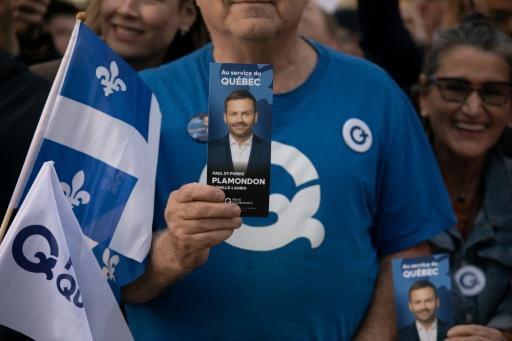
Quebec separatists look set to return to power in Canada's majority French-speaking province next week after more than a decade in opposition, promising an independence referendum after US President Donald Trump leaves office.
The Parti Quebecois (PQ) has steadily led the polls ahead of the October 5 provincial vote.
Despite a few wobbles when the party's support appeared to be cracking, a series of recent surveys firmly make the PQ the front-runner to lead the province of roughly 9 million people.
The PQ's apparent rise defies broader Canadian political trends, with the country seeing a surge of patriotism in response to Trump's punishing trade war and annexation threats.
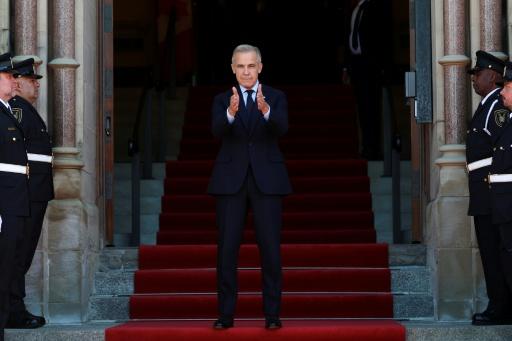
Liberal Prime Minister Mark Carney, who has rallied national sentiment in opposition to Trump, is popular in Quebec, where only about 30 percent of voters support leaving Canada, according to several recent polls.
For Quebec political expert Valerie Gaudreau, the PQ's strength is being driven by "disappointment" with the incumbent provincial government, particularly over the cost of living, not by separatist fervor.
"The desire for change is stronger than the desire for independence," the writer at Le Soleil daily told AFP.
PQ leader Paul St-Pierre Plamondon -- widely known as PSPP -- has said his party is committed to breaking away from Canada.
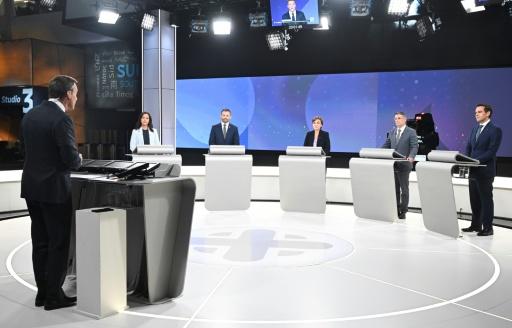
"The purpose of our people's courageous struggle is to survive in French" in a country that is overwhelmingly English-speaking and "to become a country," he told a leaders debate last week.
"That moment is coming," he added.
He just doesn't think it's possible during Trump's presidency.
PSPP declared last month that a decision on Quebec's independence "requires conditions that allow for an informed and calm debate."
And he said he doesn't want that debate "hijacked by the upheavals of American politics, nor by the theatrics of an unpredictable president," ruling out a referendum until at least 2029.
PSPP's rivals have tried to gain traction by focusing on separatism.
"We have to be honest: this election is a referendum," provincial Liberal leader Charles Milliard said at the debate.
A Leger poll published Monday gave the PQ 30 percent support, with the Liberals trailing at 26 percent. The incumbent Coalition Avenir Quebec (CAQ) has fallen to 16 percent.
With support likely to be diffused among several parties, the PQ could emerge with a majority in Quebec's 127-member provincial legislature.
That would mark a strong, and arguably surprising, result for the PQ, but may not tip the scales towards independence, a path twice rejected by Quebec voters -- comfortably in 1980 and very narrowly in 1995.
A resurgent separatist challenge in Quebec comes at a delicate time for Carney, who has warned Canadians of near-term economic pain as he tries to reduce reliance on the US market.
Two weeks after Quebec votes, the oil-rich western province of Alberta will hold its own non-binding referendum on whether its people want to break away from Canada.
But instead of spearheading a passionate campaign for national unity, Carney is keeping a low profile to avoid allegations of federal interference, said Queen's University political scientist Stephanie Chouinard.
He doesn't want to "fan the flames" in Alberta, or "feed these ideas in Quebec," she said.
But Carney, a westerner who occasionally stumbles when speaking French, has found ways to assert his commitment to Canadian bilingualism.
He has said he broke off trade talks with the Trump administration last month in part because the US was seeking provisions to weaken rules related to French-language protections in online algorithms.