


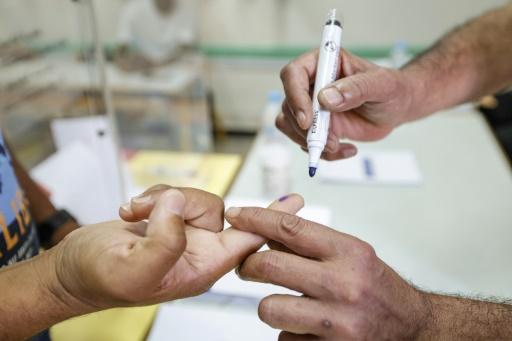
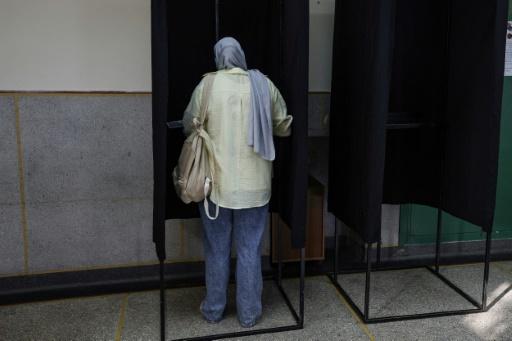
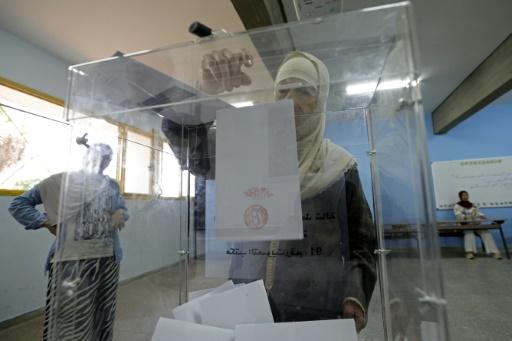
Moroccans worried about unemployment and inequality cast their ballots for a new parliament on Wednesday, in the country's first poll since a mass migration crisis and a youth-led protest movement highlighted widespread discontentment among young people.
Nearly 16 million people have registered to elect 395 members of the House of Representatives, but turnout will be a key test given the widespread voter disillusionment.
The election, in which only about four percent of registered voters are aged 18 to 24, comes less than two months after tens of thousands of mainly young Moroccans rushed into the Spanish enclave of Ceuta. It also comes as the country marked a year since a Gen Z protest movement took to the streets to demand better health and education.
The national turnout rate as of 05:00 pm had reached 28 percent, according to official figures. Polls closed at 7:00 pm and preliminary results are expected overnight.
On the campaign trail, parties focused on promises to improve quality of life in Morocco.
But many, even among the older generation, say they wouldn't vote.
"I'm not going to vote because I have lost all faith in the political class," Majda Bakatir told AFP in Rabat.
"We want our country to move forward, but politicians do not seem to care about our problems regarding healthcare, education, and purchasing power," added the 59-year-old woman.
Others, like 55-year-old Karim Ennaciri, did vote in the hopes that the election would bring about change.
"This will allow us to see if there's a renewal within the parties," he said.
In spite of the downbeat voter sentiment, the kingdom has posted economic growth and is ramping up major infrastructure projects as it prepares to co-host the 2030 World Cup alongside Spain and Portugal.
But that may have also contributed to the disillusionment, as the "World Cup bid comes at a high cost", wrote Arab Reform Initiative researcher Lamia Elfehaim.
Elfehaim said that Morocco's sporting investments were viewed by some "as out of step with the kingdom's socio-territorial priorities: failing public services, rural isolation... and high unemployment".
Morocco's prime minister is appointed by the king from the party that wins the most seats. The premier then forms a government for a five-year term, but the monarch retains control of major policy decisions.
Opinion polls are banned under Morocco's electoral law, but observers put the National Rally of Independents (RNI) -- currently heading the governing coalition -- among the favourites.
Prime Minister Aziz Akhannouch led his party's campaign, although he has stepped down as head of the RNI, which will exclude him from heading the next government if his party wins the most seats.
Akhannouch has defended his government's record -- including expanding social security coverage -- and promised the RNI will do more if re-elected.
"We have done quite important work within the government," he said at a recent rally.
"We carried out reforms in education and health, we increased salaries... we were there when (Moroccans) needed us."
The wealthy businessman has nevertheless faced repeated accusations of conflicts of interest involving his company Afriquia, Morocco's leading fuel distributor.
Akhannouch also faced widespread calls for his resignation during the youth-led Gen Z protests.
The RNI's main rival is the Authenticity and Modernity Party (PAM). The two centre-right parties are ideologically close and were founded by figures with ties to the royal palace.
The PAM has recruited a popular figure, Budget Minister Fouzi Lekjaa, better known for his role as head of the Royal Moroccan Football Federation.
"We want to make young people a force capable of bringing added value rather than being left behind," Lekjaa recently said, pledging higher wages and better purchasing power.
But the PAM has no clear leader, and its other prominent figure is Fatima Ezzahra Mansouri, currently the minister for territorial planning and mayor of Marrakesh, who could become the country's first woman premier.
The PAM has also been hit by a corruption scandal. In June, a court sentenced two of its senior figures to 10 and 12 years in prison respectively in a major drug-trafficking case involving a kingpin dubbed the "Escobar of the Sahara".
Also in contention is Istiqlal, a right-wing party led by equipment minister Nizar Baraka, with a campaign focused on social issues.
And the Islamist opposition's Justice and Development Party has centred its campaign on fighting corruption.
The conservative party, led by former prime minister Abdelilah Benkirane, has also campaigned against women's rights to equal inheritance and the decriminalisation of consensual extramarital sex.