


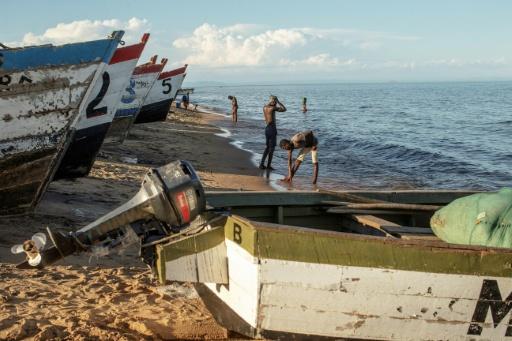
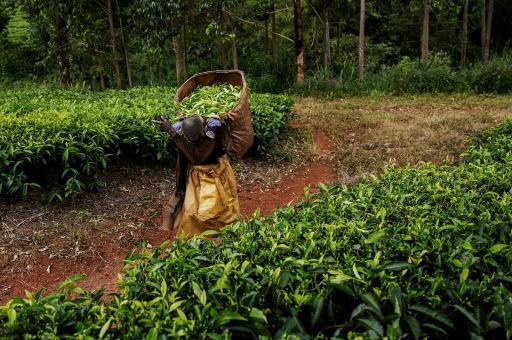
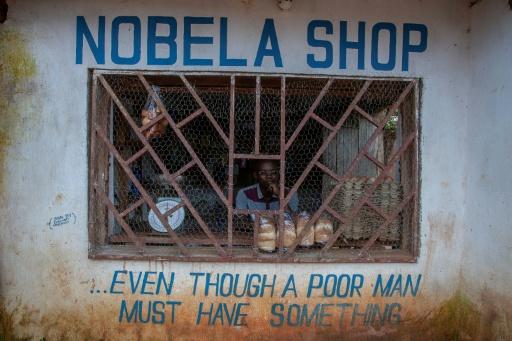
A new generation of mining projects targeting rare earth and critical minerals could transform Malawi's economy -- but experts warn of the Africa-wide challenges in turning resource wealth into broad-based prosperity.
One of the world's poorest countries, Malawi has long depended on agriculture, aid and a handful of exports such as tobacco, tea and sugar.
Now discoveries of rare earths and critical minerals potentially worth tens of billions of dollars are drawing the small southern African nation into the global scramble for materials essential for the energy transition and advanced manufacturing.
Critics warn that without stronger institutions, local participation and domestic processing, Malawi could repeat a pattern familiar in Africa of exporting valuable resources while reaping few benefits at home.
"This means a lot to us, and expectations are very high," said parliamentarian Lawrence Chakakala Chaziya whose constituency includes central Kasiya where an Australian company is advancing a major critical minerals project.
Sovereign Metals says the operation sits atop the world's largest natural deposit of rutile -- used in titanium production -- and one of the largest of graphite, an important component of lithium-ion batteries.
"Given the large quantities of deposits here, we expect the mining project to bring tangible benefits to our people, particularly in terms of improved social services," Chaziya said.
"I have already urged our people not to sell their land," he told AFP.
In the south, another Australian company is developing a project to extract rare earths used in powerful magnets for electric vehicles, wind turbines and other advanced technologies.
Canadian and Australian groups are also developing other rare earths projects and reviving a long-dormant uranium mine.
Mining currently contributes about one percent of Malawi's gross domestic product, according to figures cited by the Chamber of Mines and Energy.
The World Bank estimates the sector could account for about 12 percent of GDP by 2027.
Cumulative mineral exports could reach $30 billion between 2026 and 2040, with annual revenues approaching $3 billion by 2034.
"Mining offers Malawi a realistic chance to diversify the economy, earn foreign exchange, create skilled jobs and build industries beyond agriculture," said University of Malawi economist Gowokani Chijere-Chirwa.
The government has already moved to strengthen its hand by passing a law in 2023 removing a 10-percent ceiling on state participation in the sector.
It also plans a state mining company to pursue exploration, joint ventures and mineral beneficiation or upgrading of raw ores, said Mphatso Chikoti, acting mines director.
The country needs to produce skilled professionals, from geologists to lawyers with mining expertise, said mining expert Ahmed Dassu.
It should also shore up its geological mapping to "negotiate from a stronger position, attract credible investors and avoid giving away valuable resources without fully understanding their potential," he told AFP.
Like many resource-rich African countries, Malawi faces the challenge of breaking free from a colonial-era model that treats the continent as "a project of extractivism," said Deprose Muchena from the Open Society Foundations which supports African governments in policy development.
He cited examples of major chromium producer Zimbabwe exporting virtually all its output, while the Democratic Republic of Congo provides around 70 percent of the world's cobalt but processes only a fraction domestically.
Africa holds around 30 percent of the world's critical mineral reserves, including cobalt, copper, lithium, nickel and rare earths, according to the UN, making it a focus of competition between the United States and China for strategic resources.
Weak tax regimes and corruption further erode potential gains, with Africa losing around $88 billion annually to illicit outflows such as underpricing exports or overpricing imports, Muchena said.
Mining projects should not be operating as a separate international enclave but brought into economies to spur industrialisation, Muchena told AFP.
"Malawi has a very small window to turn around the discovery of minerals, of rare earths, into an opportunity for economic development," he said.
Latest stories
Topthemen SPD-Vize Schweitzer fordert Änderungen an Rentenreformkurs der Bundesregierung
SPD-Vizebundeschef Alexander Schweitzer hat seine Partei nach der Landtagswahl in Sachsen-Anhalt zu Änderungen an dem rentenpolitischen Reformkurs auf Bundesebene aufgefordert. Bundespolitische Themen seien "womöglich federführend" bei der Entscheidung vieler Menschen in Sachsen-Anhalt gewesen, sagte er am Montag im Deutschlandfunk. Mit Blick auf das Rentenreformkonzept von Union und SPD fügte Schweitzer an: "Es ist...
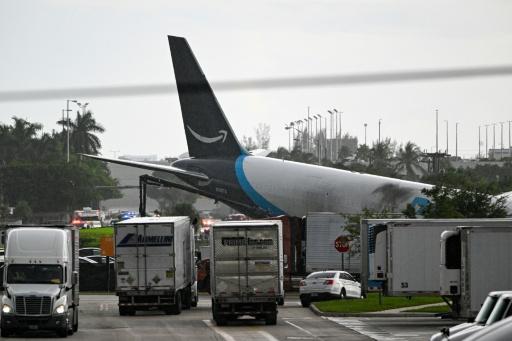
Weltgeschehen Fünf Tote bei Unglück in Miami: Amazon-Frachtflugzeug kommt von Landebahn ab
Mindestens fünf Menschen sind beim Unfall eines Frachtflugzeugs des Amazon-Konzerns am internationalen Flughafen Miami im US-Bundesstaat Florida ums Leben gekommen. Fünf Menschen seien zudem verletzt worden, drei von ihnen lebensgefährlich, teilte die Feuerwehr am Sonntag mit. Den Behörden zufolge schoss die aus Puerto Rico kommende Maschine beim...

Sports Arsenal marschiert - Sonderlob für Havertz
Teammanager Mikel Arteta hat nach dem Erfolg des englischen Fußball-Meisters FC Arsenal im Topspiel gegen den FC Chelsea viel Lob für Nationalspieler Kai Havertz gefunden. "Er wirkt glücklich", sagte der Trainer nach dem 2:1 (1:1) gegen die Blues über den Deutschen, "er wirkt ausgeglichen und zufrieden, und auch in seinem Privatleben hat sich viel Positives getan. Er fühlt sich fit, trainiert täglich und hat derzeit einen festen Rhythmus. Er erzielt...