


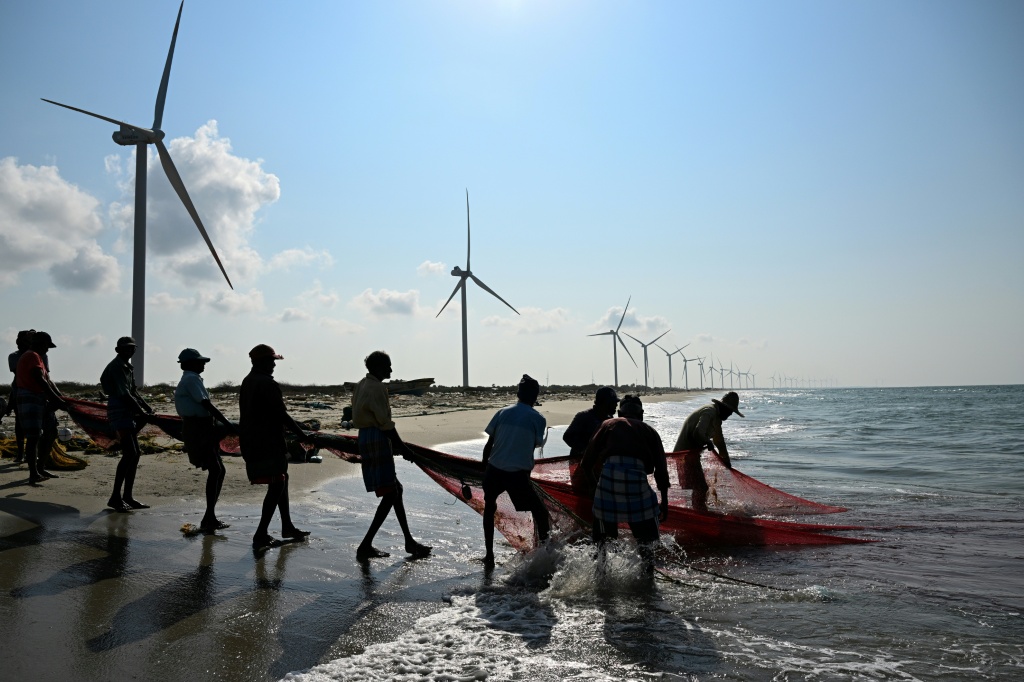
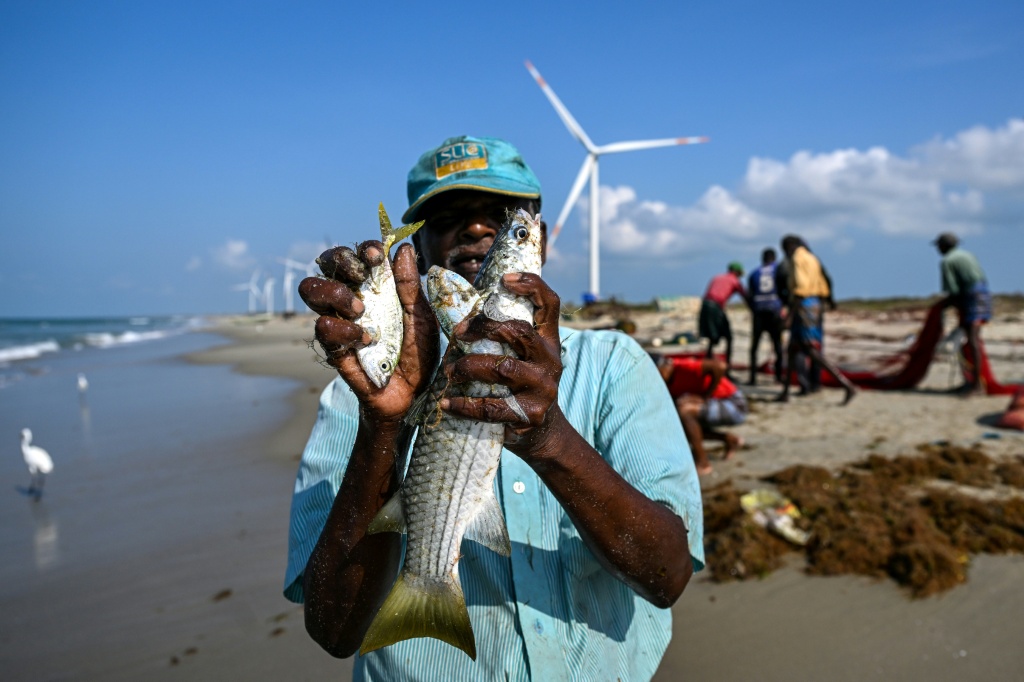
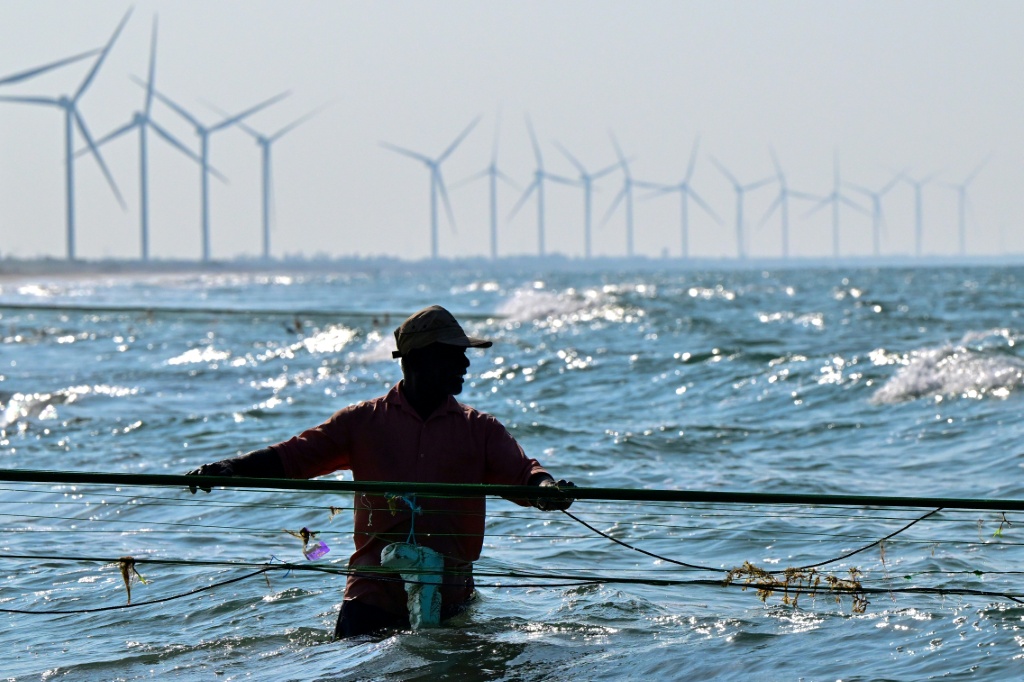
Beneath rotating wind turbines on Sri Lanka's Mannar peninsula, a fishing net is hauled up the beach by tractor winches and 20 men, but once again the catch is meagre.
"I've been fishing here since I was a boy," said Venkatasamy Kalimuththu, 65, looking disappointedly at the catch -- a few good fish, some small fry, and several clumps of seaweed.
"Before the wind turbines were installed, we caught a lot of fish," he added. "Now, much less."
Since they appeared six years ago, the Mannar wind turbines have been blamed for a host of problems -- from dwindling catches to floods, fuelling opposition to green energy projects as fuel costs soar.
Local residents are determined to see them dismantled or, at the very least, prevent more from being built.
The opposition comes as war in the Middle East sends fuel and electricity costs soaring, making the shift to renewable energy an economic imperative.
Although he admits he has no proof, Kalimuththu is convinced the spinning blades are driving fish away.
"When the fans rotate, the shadow falls on the water," he said. "So the fish don't swim up to the shallows."
His colleagues agree, also blaming the turbines -- as well as competition from Indian trawlers.
"We are not opposed to renewable energy in principle," said Lesley Jesurajan, a leading figure in the local civil society group OPEnE. "But not here. There are plenty of other places to install wind turbines."
Owned by state utility Ceylon Electricity Board (CEB), the turbines line a narrow strip of sand exposed to winds sweeping across the gulf between Sri Lanka and India.
The first phase -- 30 turbines with a combined capacity of 104 megawatts -- joined the grid in 2020, and construction on another 14 has begun.
A third phase of 52 turbines had been awarded to Indian conglomerate Adani, but the government cancelled the contract in 2025 after a dispute over the price per kilowatt-hour.
Even the first phase has fuelled anger.
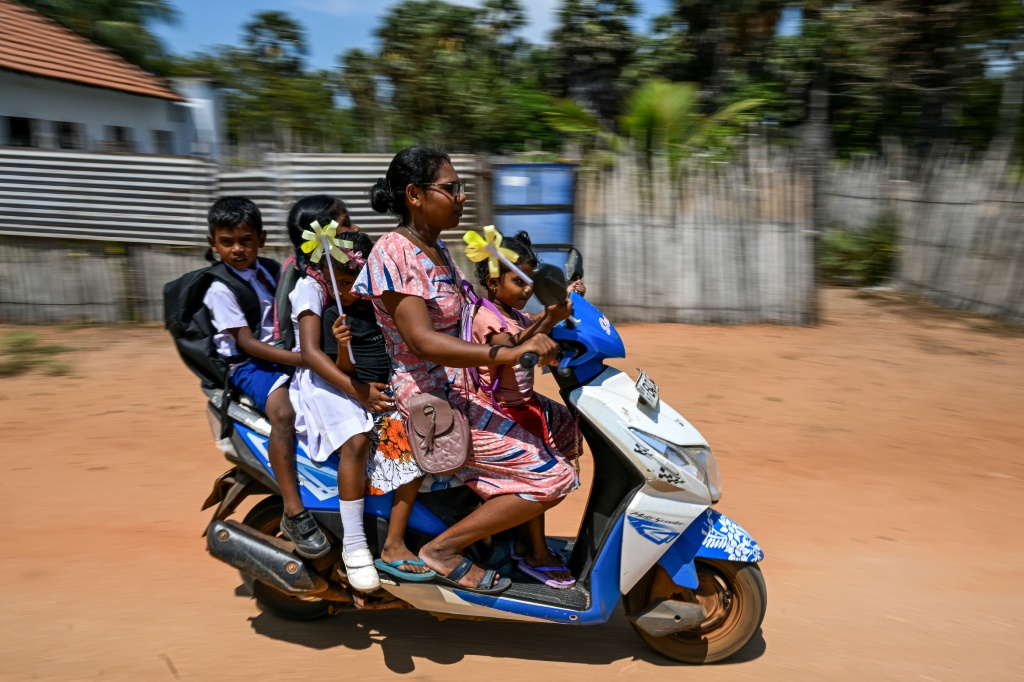
Benedict Mary Vijiliya's village, around 100 metres (330 feet) from the coast, is surrounded by wind turbines.
She claims concrete foundations and trenches for access roads have prevented rainwater from draining towards the sea.
"During the monsoon rains, the water comes up to our waists and the toilets overflow," complains Vijiliya, president of the Women's Rural Development Society (WRDS), showing photographs on her phone of her home submerged under about a metre of water.
"We never had experienced that before 2020. Our homes are damaged, our cattle and our crops are affected, our livelihood is impacted and we can't even drink the water of our well anymore".
In neighbouring Pesalai, fishing incomes have plummeted, said A. Stanislas Peries, head of the local fishermen's cooperative.
"Before, people could earn up to 5,000 rupees ($15) a day from fishing. Now they barely make more than 1,000. Things have become very difficult."
Energy Minister Anura Karunathilaka said he had heard the complaints.
"We are carrying out feasibility studies," he said. "Once we implement this...the flood situation they are currently facing can be reduced."
The government aims to generate 70 percent of the country's electricity from renewable sources by 2030, including wind power. But it has frozen new projects in Mannar to ease local opposition.
"We have already pledged... that only those projects already approved will be carried out."
Father S. Marcus, a Catholic priest and head of the Mannar Citizens' Committee, remains unconvinced.
"They had several times promised mitigation measures but nothing happened ... they are cheating our people," he added.
At his initiative, residents have filed two complaints in Sri Lankan courts. But a separate one has been filed against him.
"Apparently, we are disrupting the government," he said. "But we will not back down -- we will put an end to all this."